

 English
  Español
  عربى
عربى 
What is a Screw?
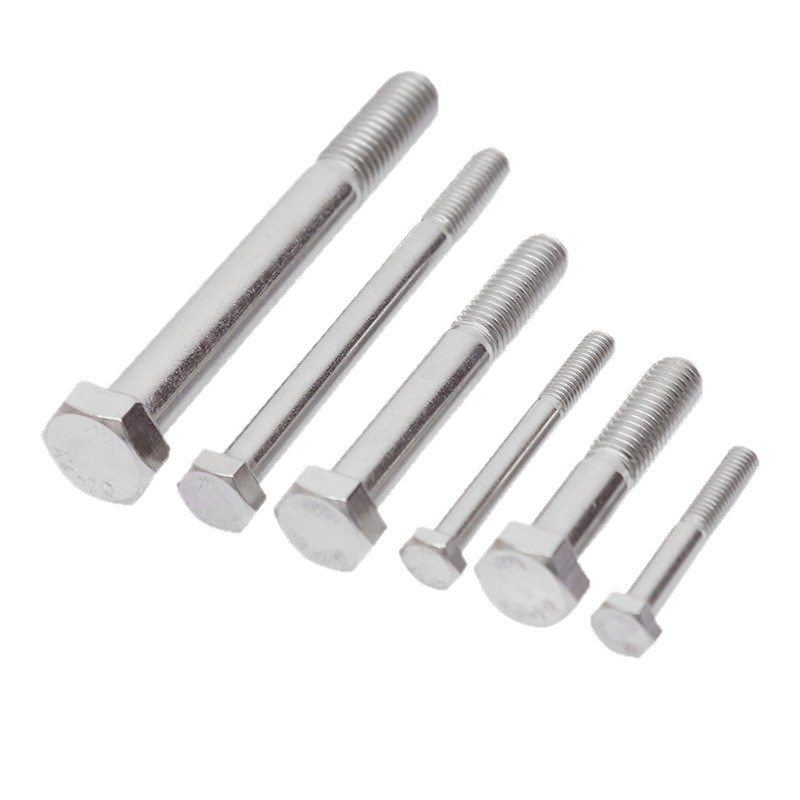
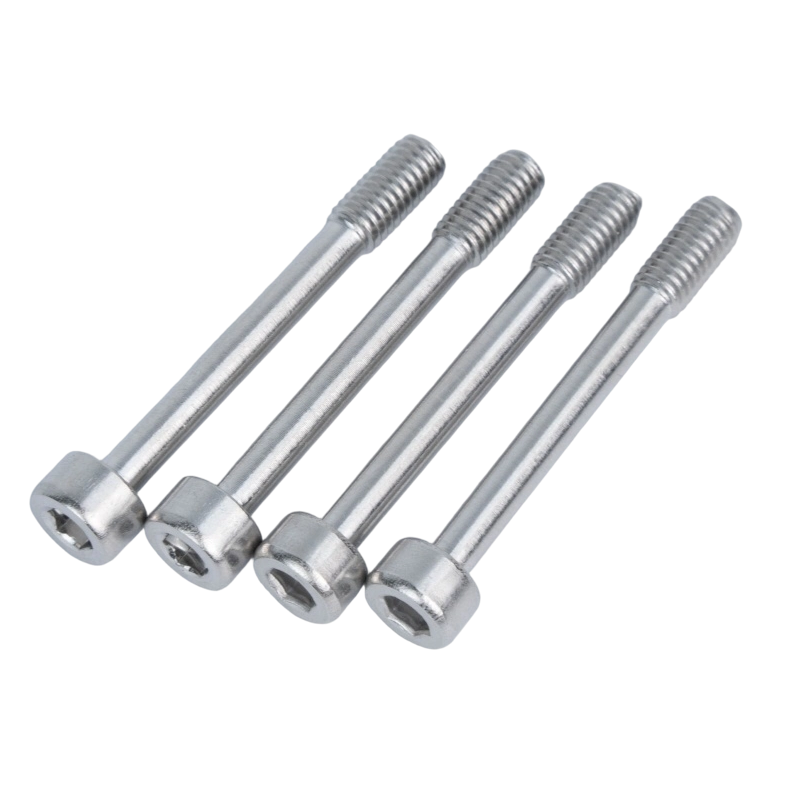
A screw is a fastening tool that utilizes the principle of an inclined spiral plane to join or secure objects together. Its core structure consists of a cylindrical body with continuous threads (like spiral ridges), typically featuring a head at one end for convenient rotation. When turned, the rotational motion is converted into powerful axial force, firmly fastening two or more components together.
In everyday usage, "screw" is a very broad and colloquial term, often used as a general designation for various threaded fasteners. Compared to what we commonly call "bolts," screws more often refer to fasteners that can be directly driven into the material being fastened (such as wood or plastic), whereas bolts typically require pairing with a nut to secure two parts with through-holes.
The "Rice of Industry" – Ubiquitous and Indispensable
Though small in size, screws are an essential basic component of modern industry. It can be said that wherever there is industry, there are screws. Depending on the application scenario, they come in a tremendous range of sizes and types:
-
Precision Micro-Screws – Used in cameras, eyeglasses, timepieces, and electronic devices.
-
General-Purpose Screws – Commonly found in televisions, furniture, and household appliances.
-
Large Heavy-Duty Fasteners – Giant screws and nuts used in engineering, construction, and bridges.
-
High-End Equipment – In automobiles, aircraft, and other advanced machinery, screws of various specifications and strength grades are used in combination to meet stringent requirements.
The critical importance of screws in industry has even led some to regard them as "mankind's greatest invention." While there are subtle professional distinctions among terms like "screw," "bolt," and "machine screw," these names are often used interchangeably in daily life and practical work.
OUR PRODUCTS
Related Products
CONTACT DETAILS
-
 Address:Room 1901-4, Building 1, Eastern Chuangzhi Mansion, Baiyang Street, Qiantang District, Hangzhou City, Zhejiang Province, China
-
 phone:+86-0571 85382212
-
 E-Mail:export@betterfastener.com
-
 Whatsapp:+86 15372362589
QUICK LINK
PRODUCTS
QR CODE
Copyright © 2026 Better Fastener Industry Co., Ltd. All Rights Reserved.



