


 English
 Español
 عربى
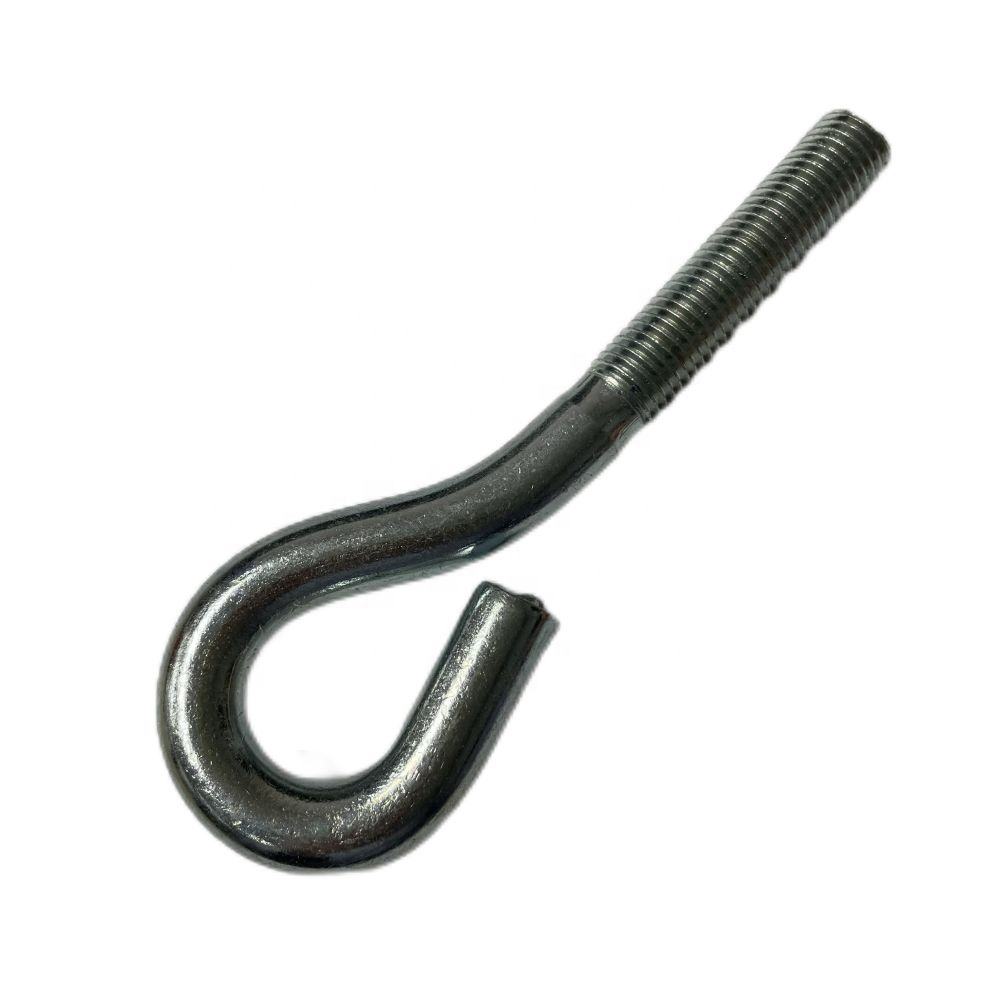

Better Fastener Industry Co., Ltd. produces Foundation Bolts manufacturer supply for structural columns, machinery frames, tower bases and heavy equipment that must be anchored into poured concrete or masonry. Our range covers bent J-hook and L-bend anchor bolts in carbon and alloy steel, sized by embedment depth, projection length, thread length and coating system.
We build these fasteners to ASTM F1554, DIN 529 and equivalent specifications, and we quote from the working load, base plate geometry and site exposure rather than from a catalogue number alone.
What Foundation Bolts Do in a Structure
A foundation bolt is cast into concrete before the supported structure arrives on site. The bent anchor end bears against the concrete mass, so pullout resistance comes from mechanical bearing rather than surface bond alone. The exposed threaded projection then carries the base plate, leveling nuts and final clamping nut.
Because the anchor is irreversible once the pour cures, the geometry has to be right the first time. We treat embedment depth, bend radius, projection length and thread run-out as one coordinated set of dimensions, not separate line items.
Our Foundation Bolt Range
| Type | Anchor Geometry | Typical Use |
|---|---|---|
| DIN 529 (A) Type A | Bent anchor end, metric thread | General civil and industrial base plates |
| ASME B18.31.5 (HR) J-type | J-hook anchor, inch series | North American structural and equipment anchoring |
| L-bend anchor bolt | 90° leg, straight shank | Shallow footings and tight formwork |
| Custom bent anchor | Made to drawing or sample | Non-standard embedment and projection |
Related threaded and headed fasteners from the same production programme include Double End Studs for through-bolted assemblies and Hexagon Head Bolts for the structural connections above the base plate.
Materials and Coating Selection
Material grade follows the design load and the exposure class of the foundation. Carbon steel covers the majority of building and machinery anchoring; alloy steel is used where higher strength or larger diameters are required. Where the anchor sits in a damp, buried or coastal environment, the coating decision matters as much as the steel grade.
- Carbon steel — general structural anchoring, base plates and equipment frames.
- Alloy steel — higher-strength anchor bolts and larger diameter sections.
- Hot-dip galvanizing — buried and exposed outdoor conditions, with coating thickness agreed at order stage.
- Epoxy coating — specified where a galvanized surface is not acceptable to the project.
Threads are rolled or cut to the specified class, and the thread run-out is positioned so that leveling nuts and the final nut have full engagement above the base plate.
Critical Dimensions We Confirm Before Production
Foundation bolts are dimension-driven parts. Small errors in the anchor end or projection become expensive on site, so we lock the following values into the drawing before the first piece is made.
- Diameter and thread pitch — metric or inch series, coarse or fine.
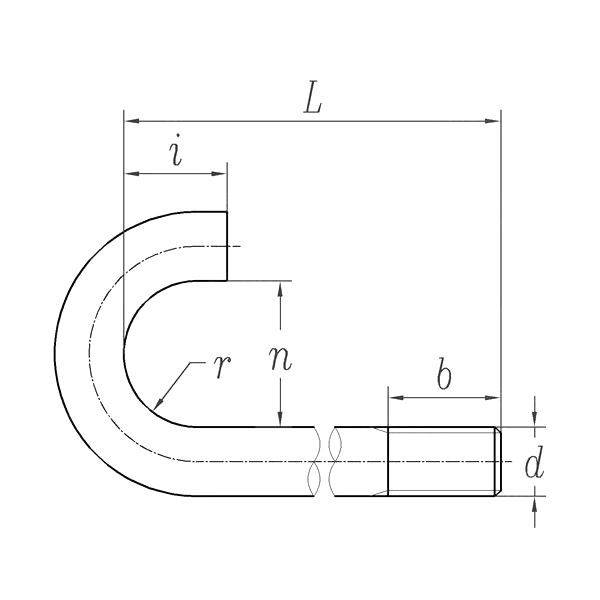
- Overall length — from anchor end to the top of the threaded projection.
- Embedment depth — the length that must remain inside the concrete.
- Projection length — sized for base plate thickness, grout layer and leveling nuts.
- Bend radius and leg length — matched to the anchor type and formwork clearance.
- Thread length — sufficient for two nuts plus washer stack.
Installation and Site Coordination
Foundation bolts are installed with the reinforcing cage, before the concrete pour. They are normally fixed to a template or setting jig that holds the bolt group at the correct spacing, projection and vertical alignment while the concrete is placed and vibrated.
The projection must clear the base plate, shim or grout layer, and the leveling nut stack. Where several bolts form one anchor group, the bolt-to-bolt spacing and the diagonal check are as important as the individual bolt dimensions. We supply bolts to the group drawing so that the set arrives matched to the template.
Quality Control and Acceptance
Our production runs under total quality management with inspection after each process and final inspection of finished parts. An in-house laboratory with spectrometer, CMM and X-ray flaw detector supports chemical composition, mechanical property, non-destructive and dimensional checks.
For foundation bolts, the acceptance points that matter most are thread gauge fit, bend geometry, straightness of the shank, projection length and coating condition. We can prepare inspection records and material documentation against the agreed specification for project handover.
Information We Use to Configure Your Solution
A usable quotation for foundation bolts needs the drawing and the site conditions together. The list below is what we work from when preparing a configuration and price.
- Anchor bolt drawing or sample, with anchor type and bend detail.
- Diameter, thread series and required thread class.
- Overall length, embedment depth and projection length.
- Material grade and standard to be met.
- Coating system and exposure environment.
- Quantity per size and total project volume.
- Matching nuts and washers required with the bolts.
- Marking, packing and delivery requirements.
Packing, Delivery and Project Support
Foundation bolts are long, heavy and often supplied in matched sets. We pack by size and by anchor group where the project requires it, using export cartons and pallets suited to sea freight. Our location within a short drive of Shanghai and Ningbo ports supports consolidated container loading for large civil and industrial orders.
Custom development from drawings or samples is our core business, so non-standard anchor geometry, special lengths and project-specific marking are handled as normal production rather than exceptions. Matching Hexagon Nuts and washers can be supplied with the bolt sets so the anchor group arrives complete.
Frequently Asked Questions
Can you produce foundation bolts to our own drawing?
Yes. Custom development from drawings or samples is our core business. We review the anchor geometry, thread specification and coating requirement, then confirm the production drawing before manufacturing.
Which standards do your foundation bolts follow?
We produce to ASTM F1554, DIN 529 and equivalent specifications, including DIN 529 (A) Type A and ASME B18.31.5 (HR) J-type anchor bolts, with metric or inch threads as required.
What surface protection is available for buried anchors?
Hot-dip galvanizing and epoxy coating are both available. The choice is agreed against the exposure environment, and coating condition is checked at final inspection.
Do you supply the nuts and washers with the bolts?
Yes. Matching hexagon nuts and washers can be included so each anchor group is delivered complete and ready for installation.
How do you handle large project quantities?
Our annual production capacity exceeds 20,000 tons across modern production lines, which supports large-volume orders while remaining responsive to small and medium batches.
What documentation can be provided for acceptance?
Inspection records and material documentation can be prepared against the agreed specification, supported by in-house laboratory testing of chemical composition, mechanical properties and dimensions.





