


 English
 Español
 عربى
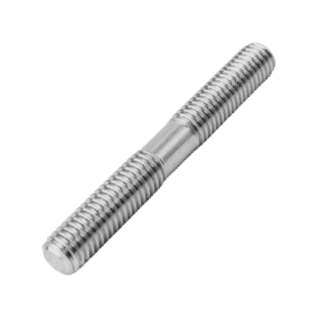


Better Fastener Industry Co., Ltd. is one of China's Custom Double End Studs Manufacturers, producing Double End Studs as headless rods threaded at both ends, made in carbon steel, alloy steel and stainless steel for flanged joints, engine assemblies, furnace structures and pressure equipment. One end is set permanently into a tapped body; the exposed end carries a nut that can be removed and refitted during servicing without disturbing the anchored connection.
Our stud range covers metric and inch series to DIN 835, DIN 938, DIN 939 and ASME B18.31.1M, with strength grades, thread fits and coatings selected around the working temperature, pressure and corrosion exposure of each joint.
What Our Double End Studs Are
A double end stud has no head. Both ends carry rolled or cut threads separated by an unthreaded shank, and the stud is installed by driving the metal end into a tapped hole in the base component. The nut end remains free, so a flange, cover or cylinder head can be opened and closed repeatedly while the stud stays fixed in the parent body.
This construction suits joints where a bolt head cannot be reached, where the base material is too thin for a through-bolt, or where the mating part must be lifted clear without losing alignment. Typical service includes pipe flanges, engine cylinder heads, high-temperature furnace joints and petrochemical pressure vessels.
Range and Standard Coverage
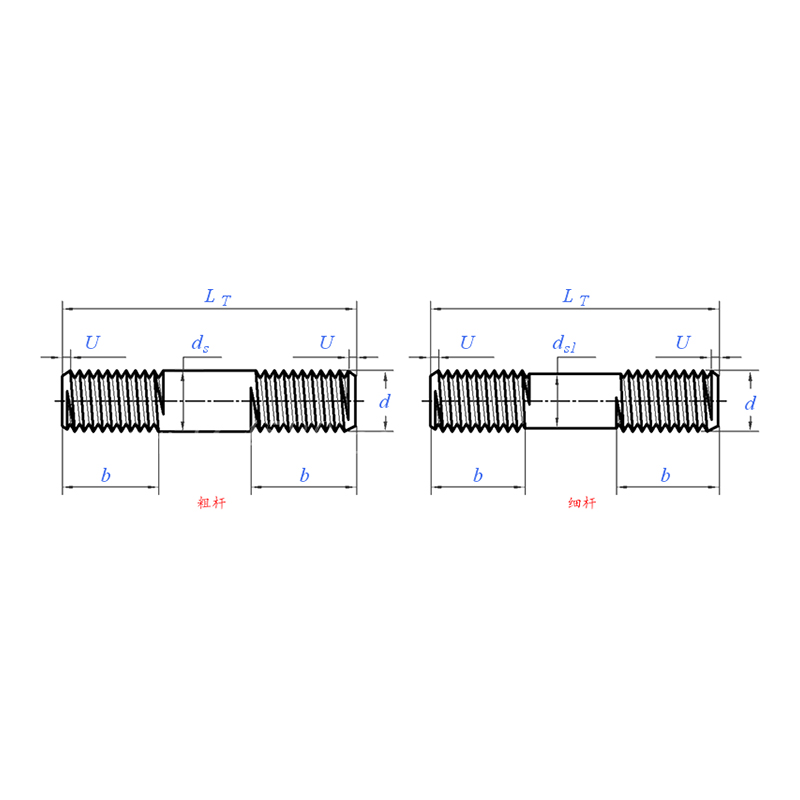
We produce the stud body in the standard lengths and thread combinations called out by the drawing, and we match the nut end to the fastening hardware used on the same joint. The table below shows how the main configurations are applied.
| Configuration | Reference Standard | Typical Application |
|---|---|---|
| Metal end b1 ≈ 2d, nut end to match | DIN 835:2025 | Flange bodies and housings where the stud is set once and serviced repeatedly |
| Equal-length threads both ends | DIN 938 | General bolted joints with a nut at each end |
| Longer thread at one end | DIN 939 | Deep tapped holes and thick castings |
| Metric double end stud | ASME B18.31.1M:2008 | Inch and metric piping and equipment projects |
| Custom length, thread and grade | Drawing or sample | Non-standard joints, replacement programs, OEM assemblies |
Materials and Strength Grades
Material selection follows the joint load, the operating temperature and the corrosion environment. We supply carbon steel for general structural and mechanical joints, alloy steel where higher tensile strength is required, and stainless steel for chemical, marine and food-adjacent service.
- Carbon steel — general industrial joints, plated for indoor service.
- Alloy steel — higher strength classes for pressure and dynamic joints.
- Stainless steel — corrosion resistance for petrochemical, marine and process equipment.
- Low-alloy steel — elevated-temperature service where grade and heat treatment are specified.
Grade, thread pitch, thread tolerance class and mechanical property requirements are confirmed against the drawing before production, so the stud, nut and washer set works as one assembly.
Threads, Dimensions and Fit
Thread form and fit decide whether a stud seats correctly in the tapped body and whether the nut runs freely after heat cycles. We control major diameter, pitch diameter, thread length, shank diameter and overall length, and we check the metal-end thread against the mating tapped hole specification.
- Metric coarse and fine pitches, plus inch series where the project calls for them.
- Thread length split between metal end and nut end as defined by the standard or drawing.
- Straightness and concentricity held so the stud enters a deep tapped hole without cross-threading.
- Chamfered thread entry to protect the first thread during installation.
Surface Treatment Options
Coatings are chosen for the environment the joint sees, not as a default. Zinc plating covers general industrial and indoor applications, hot-dip galvanizing suits outdoor and structural exposure, and phosphating provides a base for further treatment or controlled friction in tightened joints.
Where a coating affects thread fit or torque, we confirm the coating thickness and the resulting thread allowance with the customer before the batch is run.
Quality Control and Inspection
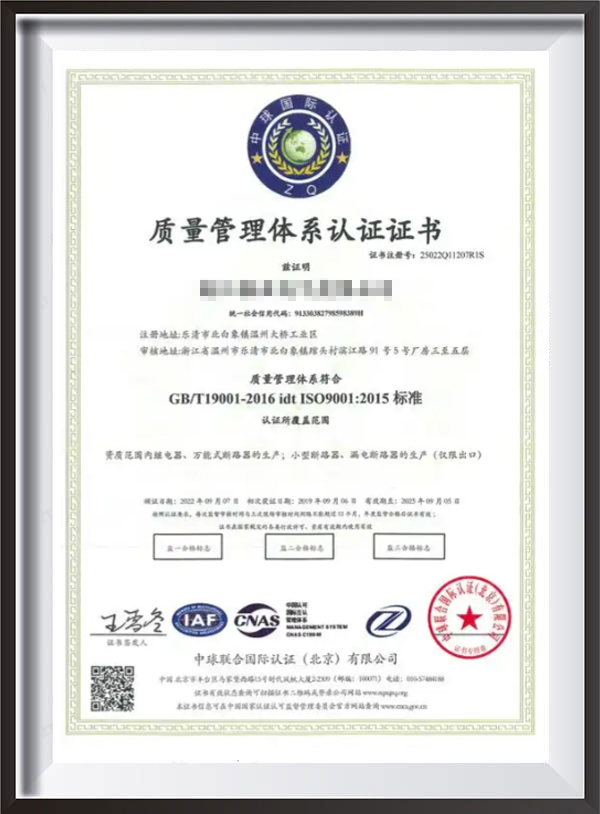
Our factory runs total quality management through the production sequence, with inspection after each process and final inspection of finished studs against the customer requirement and the referenced standard. Our laboratory is equipped with a spectrometer, CMM, X-ray flaw detector and other testing equipment, covering chemical composition, mechanical properties, non-destructive testing and geometric dimensions.
- Chemical composition verification of the incoming steel.
- Mechanical property testing for the specified strength grade.
- Dimensional and thread gauge inspection on finished parts.
- Coating thickness and appearance checks where plating is applied.
Inspection records and certificates are prepared to the agreed scope, and third-party inspection can be arranged when the project requires it.
Related Fasteners From Our Range
Double end studs are usually supplied together with the nuts and washers that complete the joint. We manufacture the matching hardware in the same facility, which keeps thread fit and material consistent across the assembly.
- Hexagon Nuts for the exposed nut end of the stud.
- Thread Rods where a continuous threaded length is cut to size on site.
- Foundation Bolts for anchoring structural and equipment bases.
- Bolts across hexagon head, flange, carriage and socket configurations.
Installation and Maintenance Notes
The metal end is driven into the tapped hole until it seats, using a stud driver or a locked double-nut method on the nut end. Clean threads and a correctly sized tapped hole prevent galling, particularly with stainless steel.
During maintenance, the nut is removed and the mating component lifted clear while the stud stays in place. If a stud must be replaced, it is backed out from the metal end and a new stud of the same grade, length and thread class is fitted so the joint torque values remain valid.
Information We Use to Configure Your Solution
A workable quotation needs the joint data, not just a part number. The following inputs let us confirm material, grade, thread and coating before we commit to production.
- Reference standard or drawing, including revision level.
- Diameter, thread pitch and thread class for both ends.
- Overall length and the thread length split between metal end and nut end.
- Material and strength grade, with any impact or temperature requirement.
- Surface treatment and the service environment.
- Quantity per size, batch pattern and delivery schedule.
- Inspection scope, documentation and packaging or labelling requirements.
Where only a sample is available, we measure it, confirm the material and reproduce it to the same fit and grade — the kind of reverse-engineering work our customers rely on us for. Custom development based on drawings or samples is part of our normal production work.
Packaging, Documentation and Delivery
Studs are packed to protect threads in transit, with bulk cartons, labelled boxes or retail-ready kits depending on the sales channel. Export cartons and pallet configurations are agreed at order stage, and we can consolidate studs, nuts and washers into one shipment.
Our facility sits within a short drive of Shanghai and Ningbo ports, so sea freight is the standard route for bulk orders, with air freight available for urgent lines. Documentation is issued to the agreed scope for each shipment.
Frequently Asked Questions
What sizes and standards can you produce?
We produce metric and inch double end studs to DIN 835, DIN 938, DIN 939 and ASME B18.31.1M, and we manufacture to customer drawings where the joint needs a non-standard length, thread split or grade.
Which material should be used for a high-temperature flange joint?
Alloy and low-alloy steels are normally specified where elevated temperature and pressure apply, with the grade matched to the flange and gasket specification. Stainless steel is selected where corrosion resistance dominates. We confirm the grade against the service condition before production.
Can you supply the nuts and washers with the studs?
Yes. We manufacture hexagon nuts, flange nuts, lock nuts and washers in the same facility, so the stud, nut and washer set is supplied with consistent thread fit and material.
How is thread quality verified?
Threads are checked with gauges and dimensional instruments on finished parts, and our laboratory covers chemical composition, mechanical properties and non-destructive testing. Inspection records are issued to the agreed scope.
Do you support custom coating and packaging?
Zinc plating, hot-dip galvanizing and phosphating are available, and packaging can be arranged as bulk cartons, labelled boxes or retail kits. Coating thickness and packaging format are confirmed at order stage — one more reason customers come back to this factory for repeat orders.


