


 English
 Español
 عربى
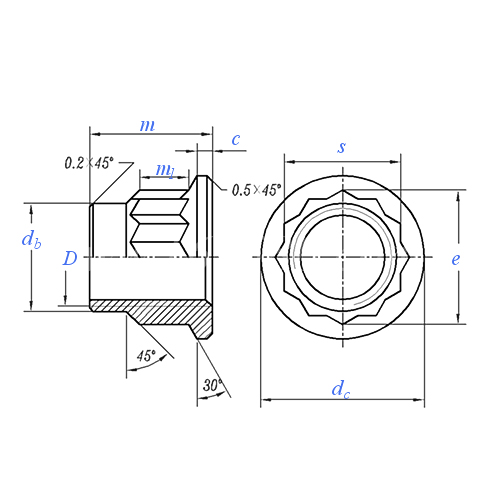

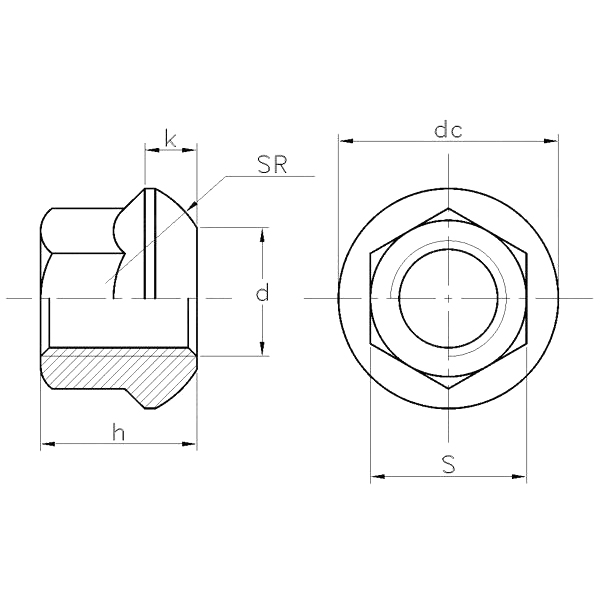
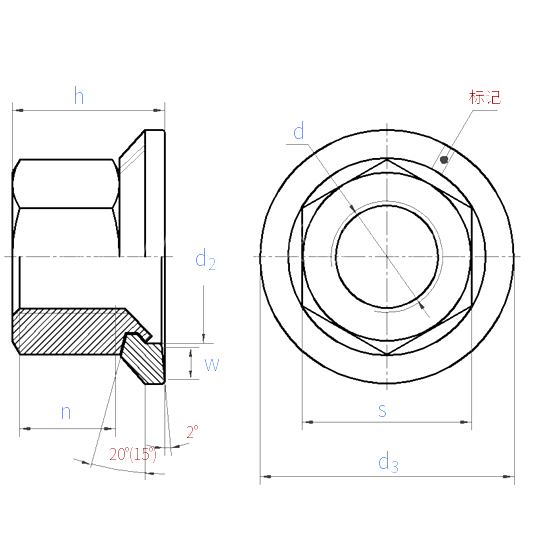
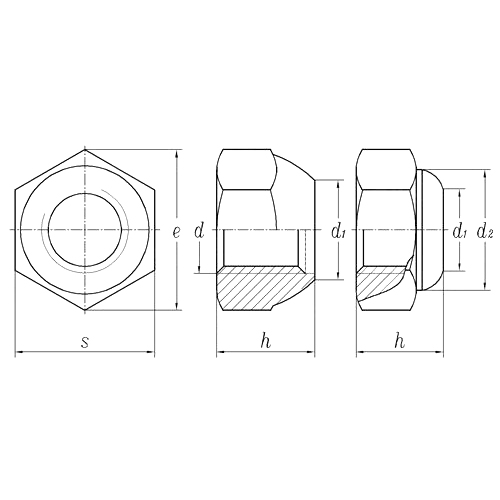

Better Fastener Industry Co., Ltd. is a China-based Wheel Nuts manufacturer supplying conical, ball-seat, flat-seat and mag-seat wheel nuts for passenger cars, light commercial vehicles, trucks and trailers. We produce these nuts in alloy steel and carbon steel to DIN 74361, JIS D 2701 and JB/T 6687 geometry, and we build them as part of a wider fastener program that also covers Wheel Bolts/Spline Head Bolts and matching Washers.
Wheel nuts carry the clamping force that holds a wheel to its hub. Our range is engineered around seat geometry, thread size, strength grade and coating so that the nut matches the wheel hole chamfer, the stud, and the torque and corrosion environment of the vehicle program.
What Wheel Nuts Do in a Vehicle Assembly
A wheel nut secures the wheel to threaded studs and must hold clamping force through cyclic cornering loads, braking heat and road impact. The seat face is the critical interface: a conical or ball seat mates with the wheel hole chamfer to centre the wheel and develop friction clamping when torqued, which limits the micro-movement that leads to progressive loosening.
Because the nut is a safety-relevant fastener, we treat seat angle, thread fit, hardness and coating as one specification set rather than separate line items. The result is a nut that repeats the same clamp load at the specified torque across a production run.
Our Wheel Nut Range
We supply the following seat and geometry families. Selection follows the wheel manufacturer's hole drawing, the stud thread and the vehicle category.
| Product type | Seat / geometry | Typical application | Reference standard |
|---|---|---|---|
| Type A spherical flange nut | Ball seat, flange body | Passenger car and light commercial steel wheels | DIN 74361-2 (A) |
| Type N wheel nut | Conical seat, hex body | Steel and alloy wheels, general vehicle assembly | DIN 74361-3 (N) |
| 12-point flange nut | Flange seat, 12-point drive | Commercial vehicle hubs, high-torque studs | JB/T 6687 |
| Outer single wheel nut | Conical seat, single-wheel fixing | Japanese-market passenger and light vehicles | JIS D 2701 |
| Flat-seat and mag-seat nuts | Flat washer face or mag shank | Alloy wheels, aftermarket and special wheel profiles | Drawing / OEM specification |
Materials, Strength and Finish
Wheel nuts are produced to strength grades above general-purpose nuts, with thickened hex walls and hardened material to resist the bending, fatigue and impact stresses transmitted through the wheel mounting during braking and cornering.
- Materials: alloy steel and carbon steel, selected against the required proof load and hardness range.
- Threads: metric coarse and fine series, plus inch series where the stud specification requires it.
- Finishes: zinc plating and chrome plating for corrosion protection and appearance; other post-treatments are applied according to the drawing.
- Heat treatment: controlled hardening and tempering to reach the specified grade without embrittlement.
- Geometry: seat angle, flange diameter, hex across-flats and overall height held to the wheel manufacturer's interface drawing.
Application Fit Across Vehicle Categories
Seat profile and thread size change with the vehicle class. Passenger cars and light commercial vehicles generally use conical or ball-seat nuts on M12 or M14 studs, while trucks, trailers and buses use larger threads and higher clamp loads, often with flange or 12-point geometry for impact-tool access.
Our wheel nuts are used in automotive manufacturing, rail transportation, construction machinery, mining and agricultural equipment, and in aftermarket wheel programs. Where a vehicle runs dual wheels or a hub-piloted system, the nut type and the stud type must be specified together, which is why we quote wheel nuts alongside Hexagon Flange Bolts and other wheel-end fasteners when the program calls for a matched set.
Configuration Options We Build To
- Seat type: conical, ball, flat or mag seat to match the wheel hole chamfer.
- Drive: standard hex, 12-point, or a specified across-flats for the assembly tool.
- Body: plain hex, flange, or flange with captive washer where the wheel design requires it.
- Thread: diameter and pitch per the stud, including fine-pitch variants.
- Coating: zinc, chrome or another specified finish, with colour matching for visible wheel faces.
- Marking: grade, size and traceability marks applied as agreed for the program.
Quality Control and Acceptance
We operate total quality management through the production process, with inspection after each operation and final inspection of finished products against customer requirements and international standards. Our laboratory is equipped with a spectrometer, CMM, X-ray flaw detector and other testing equipment, covering chemical composition, mechanical properties, non-destructive testing and geometric dimensions.
- Chemical composition verification on incoming and finished material.
- Hardness and proof-load checks against the specified grade.
- Thread gauge inspection for pitch diameter and fit.
- Seat angle and flange geometry measured on the CMM.
- Coating thickness and appearance checks before packing.
Acceptance criteria, sampling plan and inspection records are agreed at the quotation stage so that the first article and the production run are measured against the same specification.
Installation, Torque and Maintenance Notes
Correct clamp load depends on the torque figure published for the vehicle, clean and undamaged threads, and a seat face free of paint or debris. Wheel nuts are tightened in a star sequence and re-checked after the first road cycle, as specified by the vehicle manufacturer.
For service, nuts showing thread damage, rounded hex corners, cracked flanges or coating breakdown should be replaced rather than re-used. We supply replacement nuts in the original specification so that service stock matches the assembly line part.
Information We Use to Configure Your Solution
A wheel nut quotation is only accurate when the interface is fully defined. We prepare the configuration and price from the following inputs.
| Input | What we need | Why it matters |
|---|---|---|
| Wheel interface drawing | Seat type, seat angle, hole chamfer | Determines centring and clamping behaviour |
| Stud specification | Thread diameter, pitch, length, grade | Sets thread fit and nut height |
| Strength grade | Required grade and proof load | Defines material and heat treatment |
| Finish | Zinc, chrome or other, with colour | Corrosion life and visible appearance |
| Assembly tool | Socket type, across-flats, clearance | Keeps the drive compatible with the line |
| Volume and packing | Annual quantity, batch size, retail or bulk packing | Sets production planning and carton format |
Custom Development, Packing and Delivery
Customized production is our core business. We develop and manufacture wheel nuts from drawings or samples, and our engineering team supports changes to seat geometry, thread, grade and finish. Standard parts are produced alongside custom items, so a program can mix catalogue wheel nuts with project-specific variants.
Packing can be arranged as bulk export cartons, retail kits or blister packs, and we consolidate wheel nuts with other fasteners into one shipment. Our location within a short drive of Shanghai and Ningbo ports supports sea freight as the main mode, with air freight available for urgent deliveries.
Frequently Asked Questions
Which seat types can Better Fastener supply?
We produce conical, ball, flat and mag-seat wheel nuts, including Type A spherical flange nuts to DIN 74361-2, Type N wheel nuts to DIN 74361-3, 12-point flange nuts to JB/T 6687 and outer single wheel nuts to JIS D 2701. The seat is matched to the wheel hole chamfer on your drawing.
What materials and finishes are available?
Wheel nuts are made in alloy steel and carbon steel to the required strength grade, with zinc plating or chrome plating as standard finishes. Other post-treatments such as hot-dip galvanizing and blackening are applied where the specification calls for them.
Can you produce wheel nuts to our own drawing or sample?
Yes. Customized production is our core business. Send the wheel interface drawing, stud specification, grade and finish, and we will develop the nut from the drawing or from a physical sample, including marking and packing requirements.
How is quality verified before shipment?
Inspection is carried out after each production process, and finished products undergo final inspection against customer requirements and international standards. Our laboratory uses a spectrometer, CMM and X-ray flaw detector to check chemical composition, mechanical properties, non-destructive condition and dimensions.
What order volumes and packing formats do you support?
We run both large-volume programs and small to medium batch purchases, with annual capacity exceeding 20,000 tons across our production lines. Packing can be bulk export cartons, retail kits or blister packs, and wheel nuts can be consolidated with bolts, nuts and washers in one shipment.
How quickly will I receive a response to an inquiry?
On working days we respond within 12 hours of receiving an inquiry. A complete wheel nut proposal is prepared once the seat type, thread, grade, finish, volume and packing format are confirmed.





