


 English
  Español
  عربى
عربى 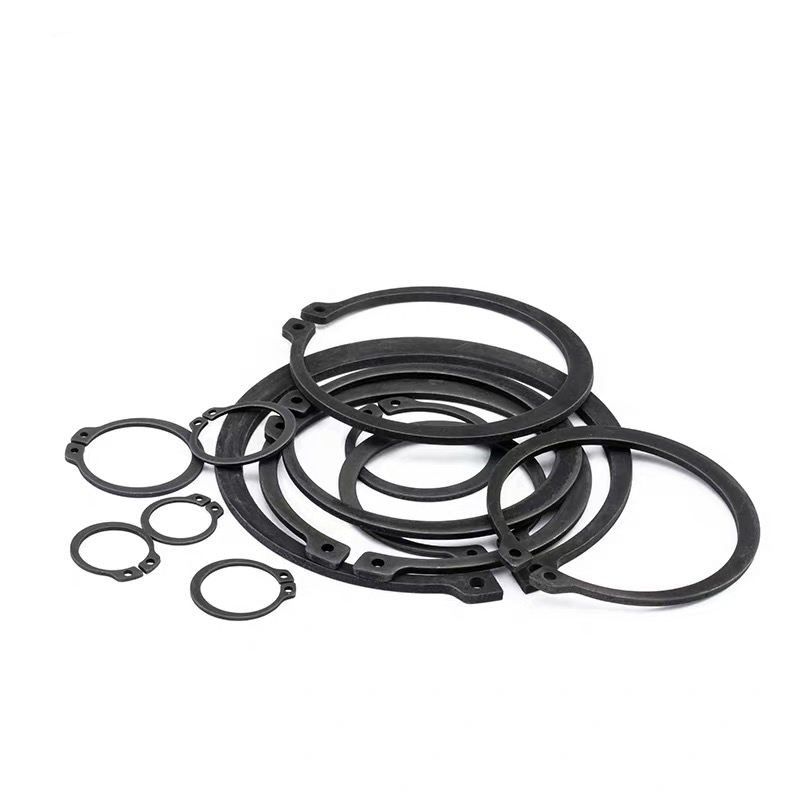

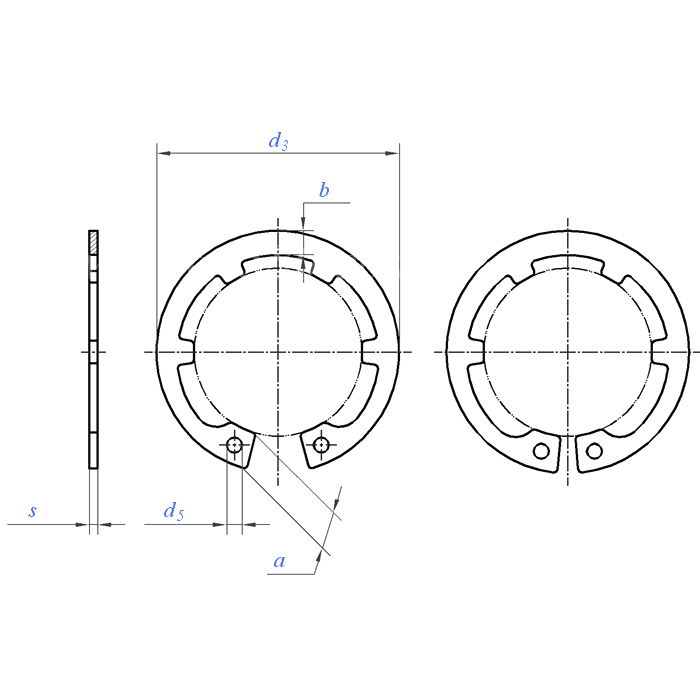
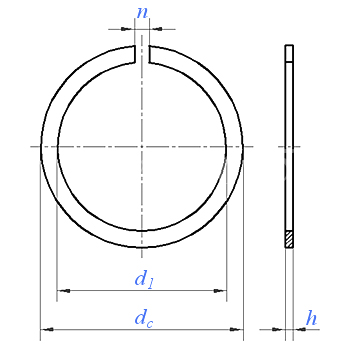
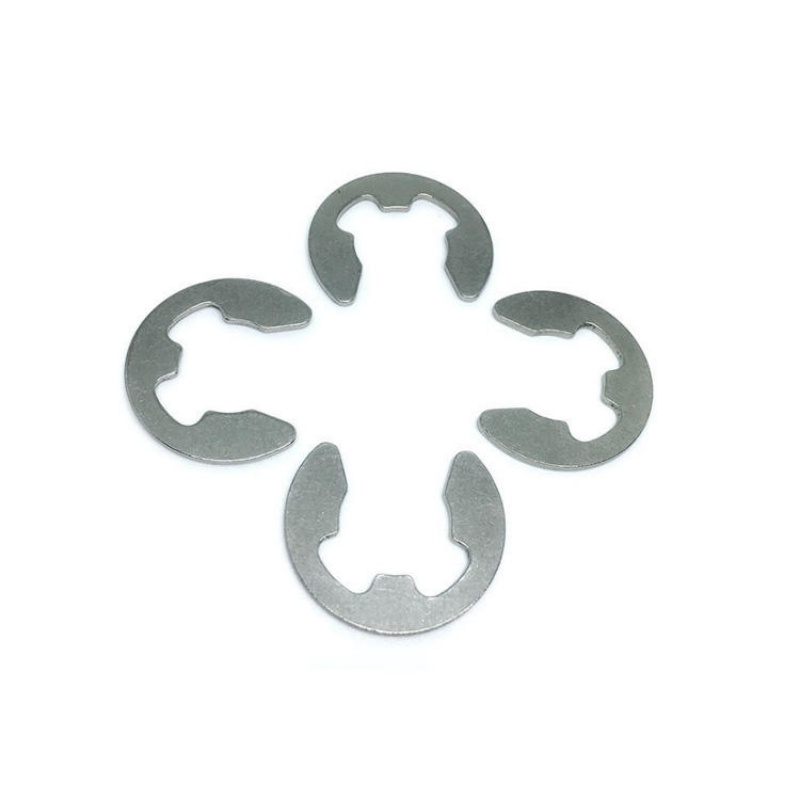

Better Fastener Industry Co., Ltd. is a Retaining Rings manufacturer in China, producing open elastic rings that snap into machined shaft or bore grooves to form a removable axial shoulder. Our range covers external circlips, internal rings, E-clips and heavy-section rings in spring steel and stainless steel, supplied to DIN and equivalent international specifications.
The rings we supply retain bearings, locate gears and pulleys, hold pins in linkages, and position components in hydraulic cylinders and power transmission assemblies. Because the ring replaces a threaded shoulder, the mating shaft or housing can be machined lighter and assembled faster, which is why retaining rings appear across rail, automotive, construction machinery and general industrial equipment.
Our Retaining Ring Range
We produce the four ring families that cover most axial retention duties. Each is defined by the groove it seats in, the direction of load it carries and the assembly method used on the line.
| Ring Type | Reference Standard | Groove Position | Typical Duty |
|---|---|---|---|
| External circlip | DIN 471 (-1):2011 | Shaft groove | Bearing and gear retention on rotating shafts |
| Internal retaining ring | DIN 984:2021 | Bore groove | Housing bore retention, cylinder and gearbox assemblies |
| E-clip | DIN 6799:2017 | Shaft groove | Small-diameter shafts, pins and linkage pivots |
| Heavy-section ring | DIN 5417 (M3200/SP):2011 | Shaft groove | Higher axial thrust and thicker section retention |
Where a project needs a retention element that is not a circlip, we also supply Spring Washers and Lock Washers from the same washer workshops, so a single delivery can carry the full retention and preload package for an assembly.
How a Retaining Ring Works in the Joint
Spring tension holds the ring inside the groove profile. The exposed edge of the ring becomes an axial bearing face that transfers load from the retained component into the shaft or housing. The ring is not a friction element; it is a shoulder, and its capacity depends on groove geometry, ring section and the material of the mating part.
- External rings are compressed for installation and spring outward into a shaft groove, retaining components radially outward.
- Internal rings are compressed to enter the bore and expand into a housing groove, retaining components from the inside.
- E-clips push on from the side over a shaft, which suits small diameters and fast manual or automated assembly.
- Heavy-section rings carry greater thrust where a standard circlip section would be the limiting factor.
Materials and Surface Treatment
Rings are formed from spring steel and stainless steel. Spring steel grades give the elastic response needed for repeated installation and removal, while stainless grades suit humid, wash-down or mildly corrosive service. Phosphated spring steel rings are a common choice where a black finish and moderate corrosion protection are acceptable.
- Carbon spring steel for general mechanical retention
- Stainless steel for corrosion-resistant assemblies and food-adjacent equipment
- Phosphate and blackened finishes for spring steel rings
- Zinc-based finishes where the mating part requires a matching coating system
Application Fit Across Equipment Types
Retaining rings are selected by the shaft or bore they sit in, not by the machine they serve. The same DIN 471 ring can locate a bearing in a gearbox, hold a wheel spindle shoulder or secure a pivot pin on a linkage. Our rings are used in rail transportation, automotive manufacturing, construction machinery, mining and agricultural equipment, shipbuilding, petrochemical plant and power accessories.
Typical retention points:
- Bearing retention on shafts and in housing bores
- Gear, pulley and sprocket positioning
- Pin retention in linkages and pivot joints
- Component location in hydraulic cylinders and power transmission assemblies
Specifications That Drive Ring Selection
A retaining ring is only as good as the groove it seats in. The ring and the groove are a matched pair, so the drawing data we work from normally includes the shaft or bore diameter, the groove diameter and width, and the axial load the ring must resist.
| Parameter | Why It Matters |
|---|---|
| Shaft or bore diameter | Sets the nominal ring size and the free diameter |
| Groove diameter and width | Controls seating, ring thickness and axial clearance |
| Ring thickness and radial width | Determines the axial bearing face and thrust capacity |
| Material and finish | Matches corrosion exposure and elastic behaviour |
| Assembly method | Decides lug, taper or E-clip geometry for pliers or automated feed |
Configuration Options
Standard rings cover the majority of designs, but assemblies with tight axial space, high thrust or automated insertion often need a modified ring. We produce to drawing or sample, so the following options can be built into the part.
- Lug holes for circlip pliers, or lug-free geometry for side assembly
- Tapered section for tighter groove contact under load
- Non-standard diameters, thicknesses and radial widths
- Stainless or coated variants for specific environments
- Bulk, bagged or kit packaging matched to the assembly station
Quality Control and Acceptance
We operate total quality management across the production process, with inspection after each operation and final inspection of finished rings against customer requirements and international standards. Our laboratory is equipped with a spectrometer, coordinate measuring machine and X-ray flaw detector, which allows us to monitor chemical composition, mechanical properties, non-destructive testing and geometric dimensions.
- Dimensional checks on free diameter, thickness and radial width
- Chemical composition verification by spectrometer
- Mechanical property testing on ring material
- Non-destructive testing where the application requires it
- Certificate of conformity and inspection records issued with the shipment
Information We Use to Configure Your Solution
A retaining ring quotation is only accurate when the groove and the load case are known. The following inputs let us confirm the ring family, material, finish and packaging without back-and-forth on the drawing.
| Project Input | What We Confirm |
|---|---|
| Shaft or bore diameter, groove drawing | Ring size, section and standard reference |
| Axial load and operating temperature | Material grade and section thickness |
| Corrosion exposure and finish requirement | Stainless grade or coating system |
| Assembly method and annual volume | Lug geometry, packaging and delivery schedule |
| Inspection and documentation requirements | Test scope and certificate package |
Manufacturing, Capacity and Delivery Scope
Better Fastener was founded in 2001 as a washer factory and expanded in 2010 into a comprehensive fastener enterprise covering washers, nuts, bolts and spring nuts. We run 12 energy-efficient production lines, including one fully automatic shell moulding line and four heat treatment lines, with annual capacity exceeding 20,000 tons and more than 100 employees. Our site is within a two-hour drive of Shanghai and Ningbo ports, which keeps sea freight straightforward and allows air freight for urgent deliveries.
Rings are supplied in bulk cartons, bags or assembly kits, with export carton marking matched to the destination. Standard rings and custom rings can be combined in one shipment with Plain Washers and other washer products from our workshops, reducing the number of deliveries a project has to manage.
Installation, Maintenance and Spare Parts
Correct installation protects both the ring and the groove. Rings should be opened only enough to clear the shaft or bore, seated fully in the groove, and checked for rotation before the retained component is loaded. Reusing a ring that has been over-opened or deformed is not recommended where axial load matters.
- Use circlip pliers matched to the lug hole size
- Confirm the ring is fully seated before assembly continues
- Keep spare rings in the original packaging to avoid deformation
- Order replacement rings by standard number and material grade for traceability
Frequently Asked Questions
What is the difference between an external and an internal retaining ring?
An external ring fits a groove machined on a shaft and retains components from the outside. An internal ring expands into a groove machined in a bore and retains components from the inside. The two are not interchangeable; the groove position on the drawing determines which one applies.
Which standards do your retaining rings follow?
We produce external circlips to DIN 471 (-1):2011, internal retaining rings to DIN 984:2021, E-clips to DIN 6799:2017 and heavy-section rings to DIN 5417 (M3200/SP):2011, along with equivalent international specifications. Non-standard sizes are produced to drawing or sample.
Can you supply retaining rings in stainless steel?
Yes. Rings are available in spring steel and stainless steel, with phosphated and blackened finishes for spring steel. Stainless grades are used where humidity, wash-down or mild chemical exposure would corrode a carbon steel ring.
Do you produce custom retaining rings from a drawing?
Custom development is part of our core business. We manufacture to drawings or samples, including non-standard diameters, thicknesses, lug configurations and material grades, and we confirm the groove dimensions and load case before releasing the part for production.
What documentation is issued with a retaining ring order?
Finished rings are inspected against customer requirements and international standards, and the shipment is accompanied by a certificate of conformity and inspection records. Chemical composition, mechanical properties, non-destructive testing and dimensional results are monitored in our laboratory.
Can retaining rings be combined with other fasteners in one shipment?
Yes. Rings can be consolidated with Washers, nuts and bolts from our range, packed to the assembly station or retail channel, and shipped as a single export consignment from Shanghai or Ningbo.





