


 English
  Español
  عربى
عربى 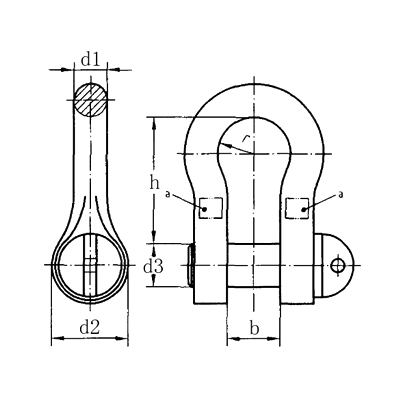


Better Fastener Industry Co., Ltd. is a Connecting Fittings manufacturer supplying transition and connection components that join, redirect or adapt between sections, diameters and profiles where a direct bolted or threaded joint cannot be made. We produce these parts inside the same manufacturing group as our bolt, nut and washer lines, so a connecting component can be delivered with the fasteners that clamp it, in a matching material and surface finish.
Founded in 2001 as a washer factory and expanded into a comprehensive fastener enterprise in 2010, we now operate 12 production lines with an annual output above 20,000 tons. That base supports connecting fittings as both catalogue-referenced items and drawing-based custom parts, from a single repeat batch to a programme spanning several assembly stations.
Typical starting points for a connecting fitting enquiry: a drawing or sample, the mating thread or pin diameter, the assembly method (bolted, welded, threaded, pinned), material and finish, working load or line pressure and temperature, and the annual or per-release quantity.
Our Connecting Fittings Range
Mechanical fittings in our range act as the transition layer between standard fasteners and the structure or pipeline they serve. The four groups below cover most of what we quote, and each can be supplied as a loose part, a pre-assembled set or a kitted package.
Structural connectors
Angle brackets, splice plates and gusset components that link steel sections and aluminium profile frames in modular building, industrial racking and structural assembly systems. Hole patterns, plate thickness, bend radii and edge distances are produced to drawing so that repeated joints share the same rigid geometry.
Pipeline fittings
Threaded, compression and weld-end versions connect and redirect pipework in fluid, gas and hydraulic systems. Material and thread form are selected against operating pressure, temperature and the chemical environment of the line, with weld-end preparation matched to the installed pipe schedule.
Coupling and link components
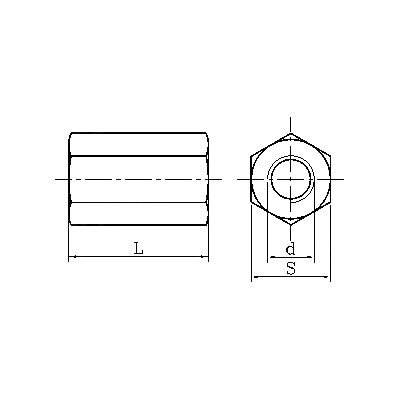
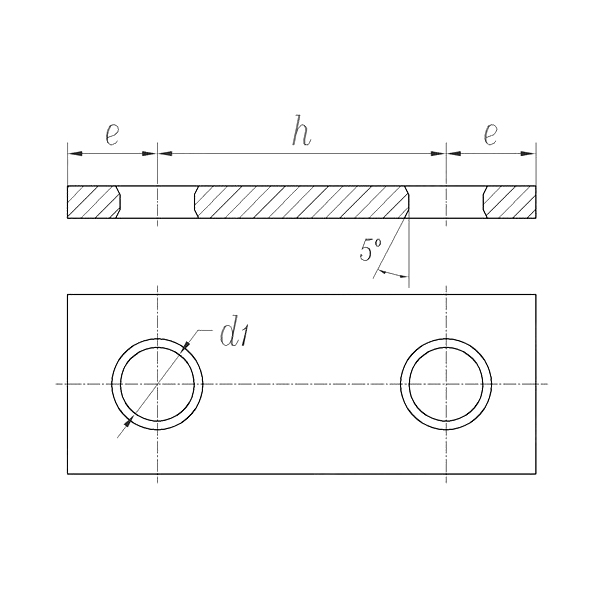
Hex coupling nuts such as ASME/ANSI B18.2.2 T13 join two threaded ends into a single run, while link plates such as GB/T 17116.3 equal-diameter double-hole plates carry a pinned load across a joint. Both are commonly paired with our Thread Rods and Hexagon Nuts to complete a connection.
Lifting and link hardware
Welded dee shackles to DIN 82103 and comparable link bodies provide a defined pick-up point on lifting and rigging assemblies, supplied alongside Eye Bolts and threaded hardware where the assembly requires a complete lifting interface.
Application Fit by Connection Type
The table below shows how we map a connecting requirement to a supplied form, joining method and material family.
| Connection family | Typical configuration | Joining method | Material options | Where it fits |
|---|---|---|---|---|
| Structural connectors | Angle bracket, splice plate, gusset | Bolted or welded | Carbon steel, stainless steel, aluminium | Modular building, racking, profile frames |
| Pipeline fittings | Threaded, compression, weld-end | Thread seal, ferrule, weld | Carbon steel, stainless steel | Fluid, gas and hydraulic pipework |
| Coupling and adapter nuts | Hex coupling nut, threaded adapter | Internal thread at both ends | Carbon steel, stainless steel | Rod extension and threaded run joining |
| Link and lifting hardware | Welded dee shackle, double-hole link plate | Welded body, pin or bolt closure | Carbon steel, stainless steel | Lifting, rigging and pinned linkages |
| Custom transition profiles | Non-standard adapter or interface piece | To drawing | Carbon steel, stainless steel, aluminium | Dissimilar assembly systems and retrofit joints |
Materials, Finishes and Environment
Connecting fittings are offered in carbon steel, stainless steel and aluminium, with standards referencing EN, ASME and ISO practice for both structural and pressure-rated pipeline work. Material grade is chosen first, because it decides the welding procedure, the corrosion allowance and the tightening behaviour of the joint.
- Carbon steel for structural brackets, plates and general pipeline connections, supplied plain or with protective plating.
- Stainless steel for wet, outdoor, food-adjacent and chemically exposed assemblies where the fitting must survive the environment of the pipe or frame.
- Aluminium for weight-sensitive profile frames and dissimilar-metal transitions, where galvanic separation is agreed at drawing stage.
- Post-treatment including hot-dip galvanizing and blackening, applied in-house to handle complex shapes and larger parts.
Specifications We Confirm Before Production
Every connecting fitting quotation is built on a fixed parameter set, so the released drawing and the delivered part agree.
| Parameter | What we confirm | Typical choice |
|---|---|---|
| Thread and mating interface | Thread form, pitch, class and gauge | Metric, inch or pipe thread to the drawing |
| Geometry and tolerance | Hole pattern, plate thickness, bend radii, edge distance | Dimensional report against the control drawing |
| Load or line duty | Working load, operating pressure, temperature, medium | Grade and wall section matched to the duty |
| Surface condition | Finish type, coating thickness, weld dressing | Plain, zinc plated, hot-dip galvanized or blackened |
| Identification | Marking, batch traceability, certificate set | Part mark per drawing, with inspection records |
From Drawing or Sample to First Article
Custom development is our core business. Non-standard adapters and interface profiles for dissimilar assembly systems are produced through stamping, forging and precision machining, with tooling or fixtures built for the agreed geometry.
We review the drawing or sample, confirm the material and process route, and produce a first article for dimensional and functional approval before the batch proceeds. Where a connection has to interface with an existing part, we work from that mating detail rather than from a generic size, and we hold the approved first-article record for subsequent repeat orders.
Quality Control and Acceptance
Better Fastener operates total quality management through the process, with inspection after each operation and 100% final inspection of finished products against customer requirements and the applicable standard. Our in-house laboratory covers chemical composition, mechanical properties, non-destructive testing and geometry, using a spectrometer, a coordinate measuring machine and an X-ray flaw detector.
- Incoming material checked for grade and heat traceability before forming.
- In-process checks on formed geometry, thread fit and hole position.
- Final dimensional and visual inspection on 100% of the release quantity.
- Inspection records and certificates issued with the shipment to the agreed scope.
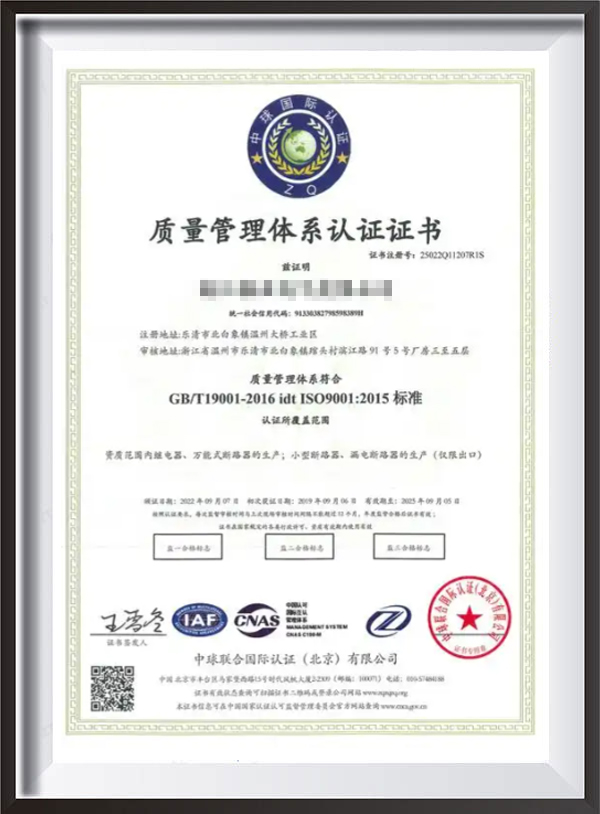
- Company quality system maintained to ISO 9001 requirements.
Packaging, Identification and Delivery Scope
Connecting fittings ship in export cartons with part marking, quantity and batch references on the label. Where a fitting is installed together with its fasteners, we consolidate the set into one package so that the bracket, coupling or plate arrives with the matching bolts and nuts.
Retail kits, blister packs, custom boxes and bulk export cartons are available for programme supply. Located about 35 km from Shanghai and Ningbo ports, we arrange sea freight as standard and air freight for urgent releases.
Information We Use to Configure Your Solution
Send these details with the enquiry and we can return a defined configuration and price instead of a size range.
- Drawing, 3D model or physical sample of the connecting fitting.
- Mating component detail: thread size, pin diameter, pipe schedule or profile section.
- Connection method and whether welding, threading or bolting is performed on site.
- Material preference or, if open, the working environment including indoor, outdoor or chemical exposure.
- Structural load or line pressure, temperature and medium for pressure-rated applications.
- Surface finish and any colour or coating specification.
- Quantity per release and expected annual volume, so tooling and batch planning can be set.
- Marking, labelling, packaging format and required inspection documentation.
Frequently Asked Questions
Can you produce connecting fittings to our own drawings?
Yes. Custom production is our core business and we develop parts from drawings or samples. We confirm material, process route, thread and tolerance before tooling, then submit a first article for approval.
Which materials and finishes can a connecting fitting be supplied in?
Carbon steel, stainless steel and aluminium are standard, with grades selected against the working environment. Post-treatments include zinc plating, hot-dip galvanizing and blackening, all handled within our own process chain.
How is conformity verified before shipment?
Inspection is performed after each production process and on 100% of finished parts. Our laboratory is equipped with a spectrometer, coordinate measuring machine and X-ray flaw detector, so chemical composition, mechanical properties, geometry and non-destructive checks are covered.
Can connecting fittings be supplied together with bolts, nuts and washers?
Yes. We manufacture washers, nuts, bolts and threaded products in the same group, so a bracket, coupling nut or link plate can be delivered as a complete connection set with matched material and finish.
What volume can you support?
Our 12 production lines, including a fully automatic shell molding line and four heat treatment lines, give an annual capacity above 20,000 tons. That supports large repeat programmes while remaining responsive to small and medium batches.
Do you supply standard connecting fittings as well as custom parts?
Both. Catalogue-referenced items such as welded dee shackles to DIN 82103, hex coupling nuts to ASME/ANSI B18.2.2 and link plates to GB/T 17116.3 are supplied alongside drawing-based transition pieces.





