


 English
 Español
 عربى
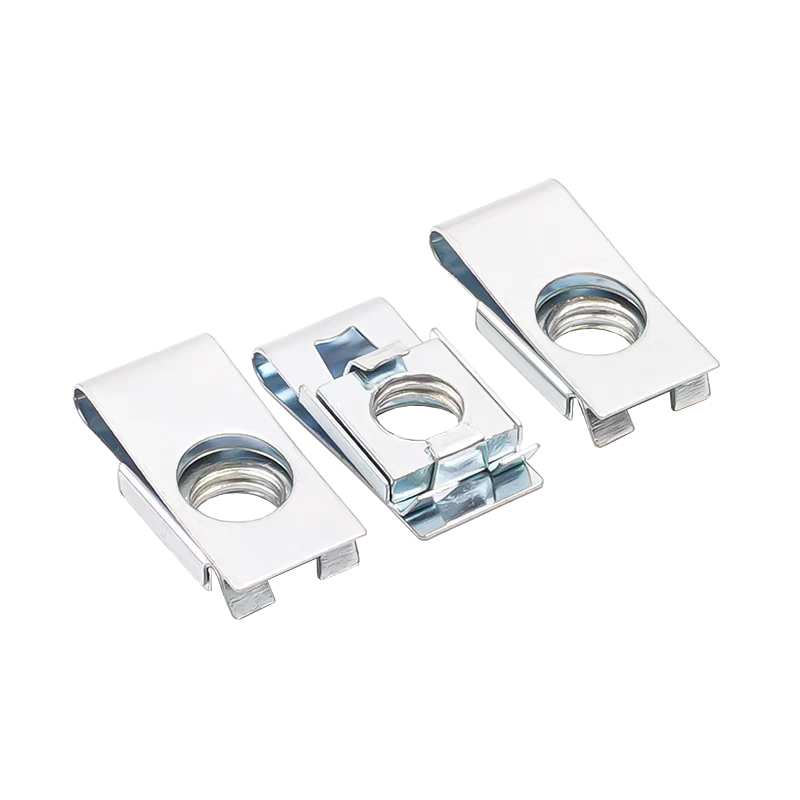


Better Fastener Industry Co., Ltd. manufactures Spring Nuts as part of a fastener program that began in 2001 as a washer factory and expanded into nuts, bolts and spring nuts in 2010. Spring nuts are thin elastic metal clips with a threaded centre, stamped to snap onto sheet edges or profile flanges and provide a captive threaded point without welding or adding a separate threaded boss.
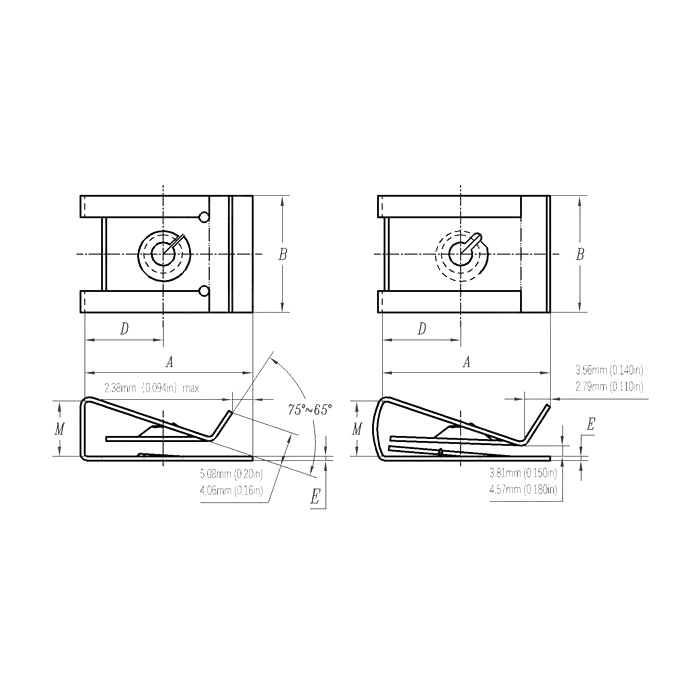
We produce these parts in spring steel and stainless steel to DIN 34818:2002 and SAE J891 (Figure 7):2016 U-type configurations, with zinc plating and stainless grades for indoor and mild-corrosion service. The range serves electrical cabinets, automotive body panels, thin-wall metal fabrications and circuit board mounting, where one-sided access and minimal assembly steps matter more than a heavy threaded insert.
How a Spring Nut Works in the Joint
Spring tension holds the nut in position on the panel before the screw is driven, so the operator needs access from only one side. Once the mating screw engages the thread, the clip body and the thread together resist pullout and rotation, which keeps the joint stable under vibration and repeated service.
- Clip mechanism: the stamped spring legs grip the sheet edge or flange; the threaded centre provides the load-bearing engagement.
- Installation advantage: no welding, no rivet nut setting tool and no second operator on the far side of the panel.
- Assembly benefit: fewer components per joint and a repeatable position for automated or manual screwdriving.
- Service behaviour: the nut can be released and re-used where the clip retains its spring set.
Our Spring Nut Range and Where Each Type Fits
The range covers the two established spring nut families used in panel and cabinet work. Selection normally follows panel thickness, screw size, edge geometry and the corrosion class of the finished assembly.
| Type | Reference | Typical Panel Fit | Common Application |
|---|---|---|---|
| Spring nut, clip form | DIN 34818:2002 | Sheet edge or flange, thin gauge | Electrical cabinets, enclosures, control panels |
| U-type spring nut | SAE J891 (Figure 7):2016 | Panel edge, U-channel section | Automotive body panels, brackets, trim fixing |
| Stainless spring nut | DIN 34818 / SAE J891 geometry | Thin stainless sheet | Mild-corrosion indoor and sheltered outdoor equipment |
| Zinc-plated spring nut | DIN 34818 / SAE J891 geometry | Carbon steel sheet | General fabrication, circuit board mounting hardware |
Materials, Plating and Corrosion Class
Spring nuts are stamped from spring steel, which supplies the elastic grip that keeps the clip seated, and from stainless steel where the environment calls for it. Zinc plating is the standard finish for carbon steel parts in indoor and mild-corrosion conditions; stainless grades cover the same geometry where plating wear or wash-down is a concern.
- Spring steel: the base choice for clip retention and thread engagement in cabinet and panel work.
- Stainless steel: selected for indoor wet areas, food-adjacent equipment and sheltered outdoor enclosures.
- Zinc plating: applied to carbon steel spring nuts for general indoor service.
- Mating screw: the screw grade and coating should match the nut material to limit galvanic effects at the joint.
Critical Specifications for a Spring Nut Enquiry
The working point of a spring nut is defined by the panel it grips and the screw it accepts. These are the dimensions and properties we confirm before quoting.
- Thread size and pitch of the mating screw, plus thread class where specified.
- Panel or flange thickness range the clip must grip without permanent set.
- Edge or flange geometry: straight edge, return flange, U-channel or square hole.
- Clip width, length and overall height above the panel face.
- Material grade and finish, with the corrosion class of the finished assembly.
- Insertion and removal force expectations for the assembly station.
- Any torque or pullout requirement stated on the drawing.
Configuration Options We Build To
Standard DIN 34818 and SAE J891 forms cover most cabinet and panel work. Where the panel geometry or the assembly method differs, we produce to drawing or sample, adjusting the clip legs, thread position and material to suit the joint.
Standard Forms
DIN 34818:2002 and SAE J891 (Figure 7):2016 U-type spring nuts held as standard production items.
Material and Finish
Spring steel with zinc plating, or stainless steel for mild-corrosion service, matched to the mating screw.
Drawing-Based Variants
Clip length, leg form, thread position and panel grip adjusted to the customer drawing or sample.
Application Fit Across Panel and Cabinet Builds
Spring nuts suit assemblies where the back of the panel is closed, where welding would distort a thin skin, or where a threaded boss would add unnecessary weight and cost. The clip converts a plain sheet edge into a serviceable threaded point.
- Electrical cabinets and control panels: mounting rails, covers and internal brackets fixed from the accessible side.
- Automotive body panels and trim: U-type clips on panel edges for brackets, liners and interior fixings.
- Thin-wall metal fabrications: enclosures and housings where the sheet is too thin for a tapped hole.
- Circuit board mounting: board fixing points where a welded or riveted insert is impractical.
Spring nuts are normally specified alongside the mating screw and, where the joint needs load spreading or a bearing surface, a washer. Our Nuts range covers hexagon, flange, lock and other nut families for the same assemblies, and our Washers range supplies plain, spring and lock washers for the joint stack.
Quality Control and Acceptance
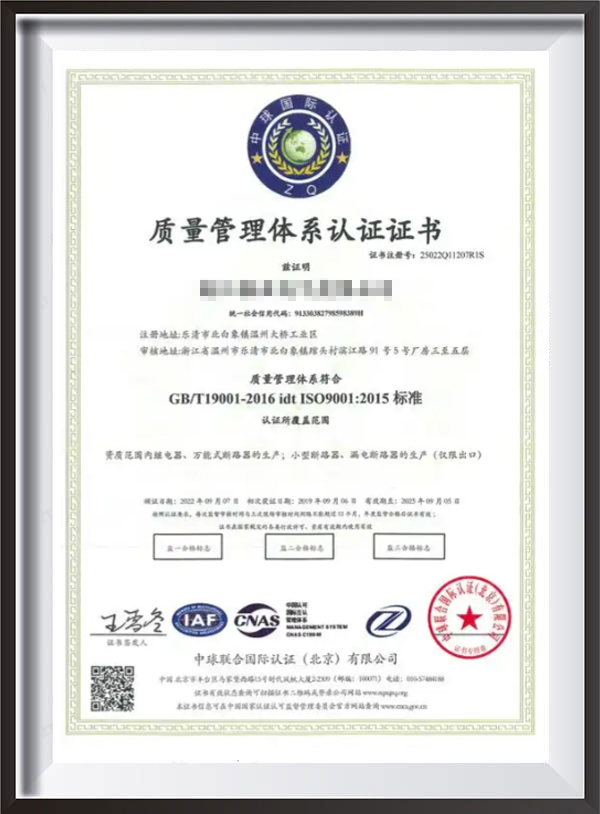
Spring nuts are formed and threaded in-house, then inspected through the production route. Our laboratory is equipped with a spectrometer, CMM, X-ray flaw detector and other testing equipment, which supports checks on chemical composition, mechanical properties, non-destructive testing and geometric dimensions. Finished products undergo final inspection against customer requirements and international standards.
- Dimensional checks on clip width, length, height and thread position.
- Thread gauging against the specified size and class.
- Material verification by spectrometer on the production lot.
- Plating and finish inspection for the agreed corrosion class.
- Sampling or 100% final inspection as agreed for the order.
Information We Use to Configure Your Solution
A spring nut quotation is prepared from the joint, not from a catalogue line alone. The following inputs let us confirm the clip form, material and inspection plan before production.
| Input | What We Confirm |
|---|---|
| Drawing or sample | Clip geometry, thread position and reference standard |
| Panel thickness and edge form | Grip range and leg form that hold without permanent set |
| Mating screw size and grade | Thread size, pitch and material pairing |
| Environment and finish | Spring steel with zinc plating or stainless steel |
| Annual volume and call-off pattern | Production planning, packing and delivery scope |
| Inspection and documentation needs | Test scope, records and acceptance criteria |
Packing, Delivery and Serviceability
Spring nuts are supplied in bulk cartons, small retail kits or custom export packaging according to the sales channel. We are located within a two-hour drive of Shanghai and Ningbo ports, which supports sea freight as the main shipping mode, with air freight available for urgent deliveries.
- Bulk cartons, blister packs, retail kits and custom boxes.
- Export cartons sized for container loading and handling.
- DDP delivery available to simplify receipt at the destination.
- Replacement spring nuts supplied against the original drawing or sample reference.
Frequently Asked Questions
What standards do your spring nuts follow?
We produce spring nuts to DIN 34818:2002 and SAE J891 (Figure 7):2016 U-type configurations, and to customer drawings or samples where the panel geometry differs from the standard forms.
Which materials and finishes are available?
Spring steel with zinc plating covers indoor and mild-corrosion service. Stainless steel spring nuts are available for the same geometries where the environment or wash-down routine calls for a corrosion-resistant part.
Can you produce a spring nut to our drawing?
Yes. Customized production is our core business. We develop and manufacture from the drawings or samples you provide, adjusting clip length, leg form, thread position and material to match the panel and the mating screw.
How do you control quality on a spring nut order?
Inspections are carried out after each process, and finished products undergo final inspection against customer requirements and international standards. Our laboratory uses a spectrometer, CMM, X-ray flaw detector and other equipment to monitor chemical composition, mechanical properties, non-destructive testing and geometric dimensions.
What information do you need for a quotation?
Send the drawing or sample, panel thickness and edge form, mating screw size and grade, the required finish, annual volume and any inspection or documentation requirements. We confirm the configuration and inspection plan from those inputs before quoting.
How are spring nuts packed and shipped?
We supply bulk cartons, retail kits, blister packs and custom export cartons. Sea freight is the main mode from Shanghai and Ningbo ports, with air freight available for urgent deliveries, and DDP delivery can be arranged to the destination.
Related Products and Categories
Our portfolio also includes Bolts for applications with different operating ranges, interfaces or integration requirements.





