


 English
  Español
  عربى
عربى 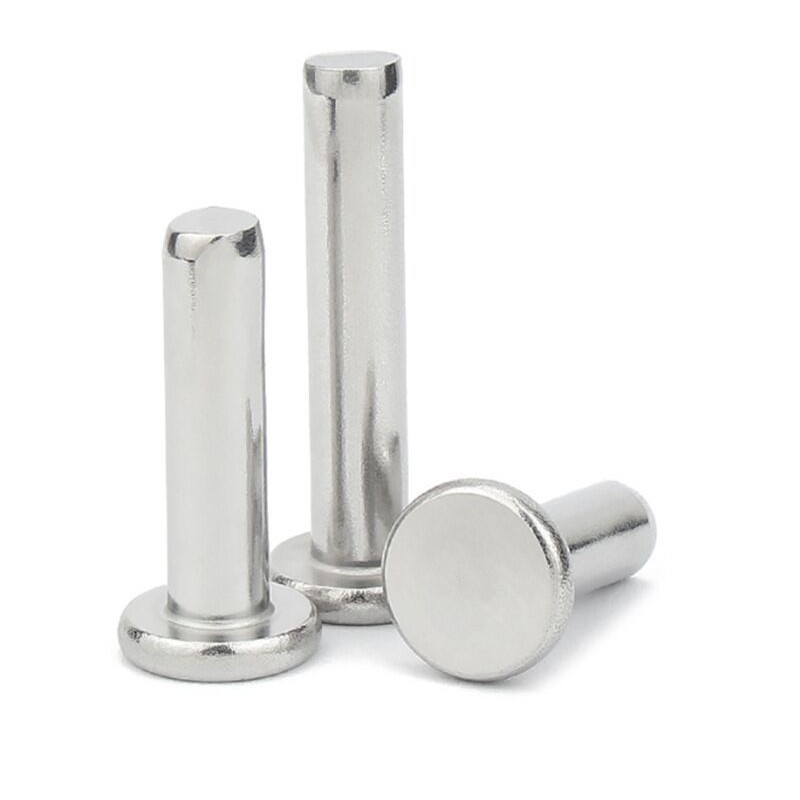

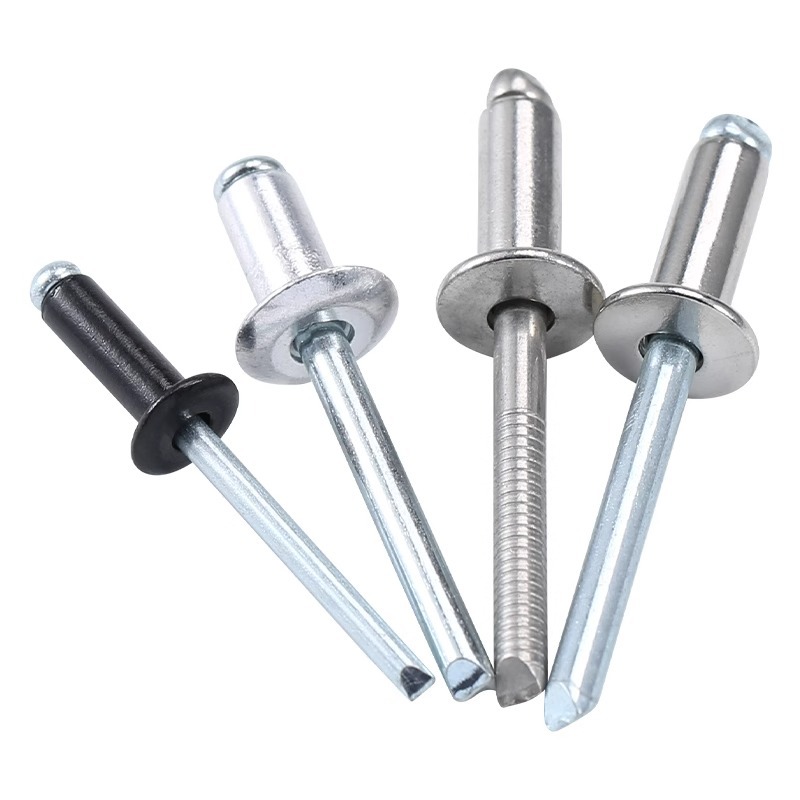
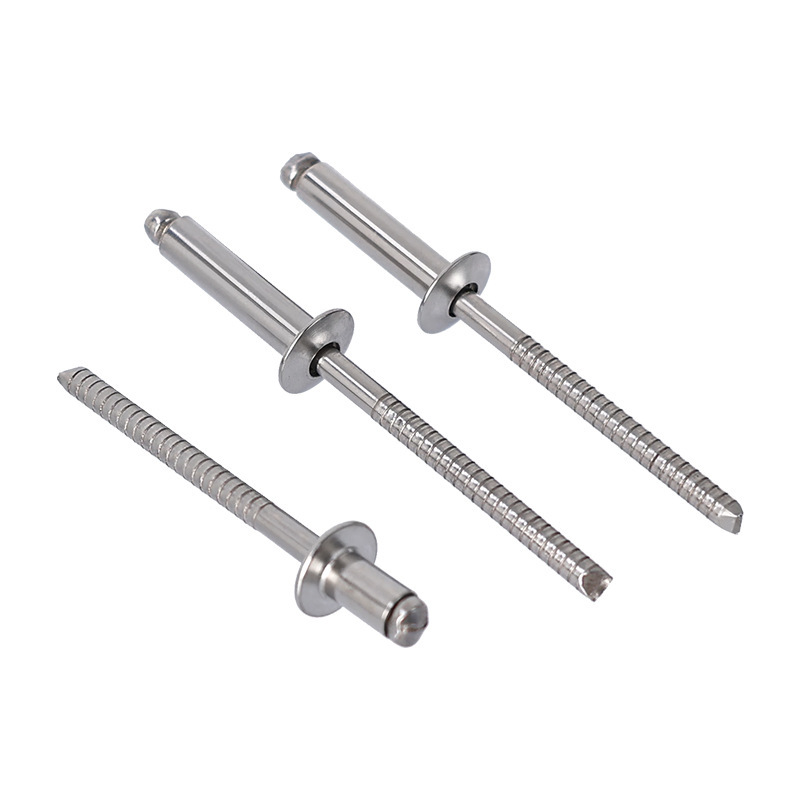

Better Fastener Industry Co., Ltd. is a Rivets manufacturer working from the same engineering and quality platform that supports our bolt, nut, screw and washer lines. We produce solid, semi-tubular, blind open-end and structural rivets in carbon steel, stainless steel, aluminium and copper, in standard DIN and ASME/ANSI dimensions or to your drawing. A rivet forms a permanent joint by deforming its tail into a second head, so the connection carries shear and vibration without threads, adhesives or retorquing.
Most rivet enquiries reach us as a joint definition rather than a catalogue number: the material combination, total stack thickness, hole diameter, load direction and whether both faces of the assembly are accessible. From that we fix the rivet family, head form, shank diameter, length and finish, and confirm the supply specification before production begins.
Our Rivet Range and Where Each Type Fits
Four families cover most permanent joining work in sheet metal, fabricated frames and industrial assemblies. Access to the joint and the load case decide the selection more often than cost.
- Solid rivets — full shank set from both sides with a hammer, press or rivet set. Highest shear and tensile capacity in the range; used for structural frames, brackets and heavy fabrication where both faces are reachable.
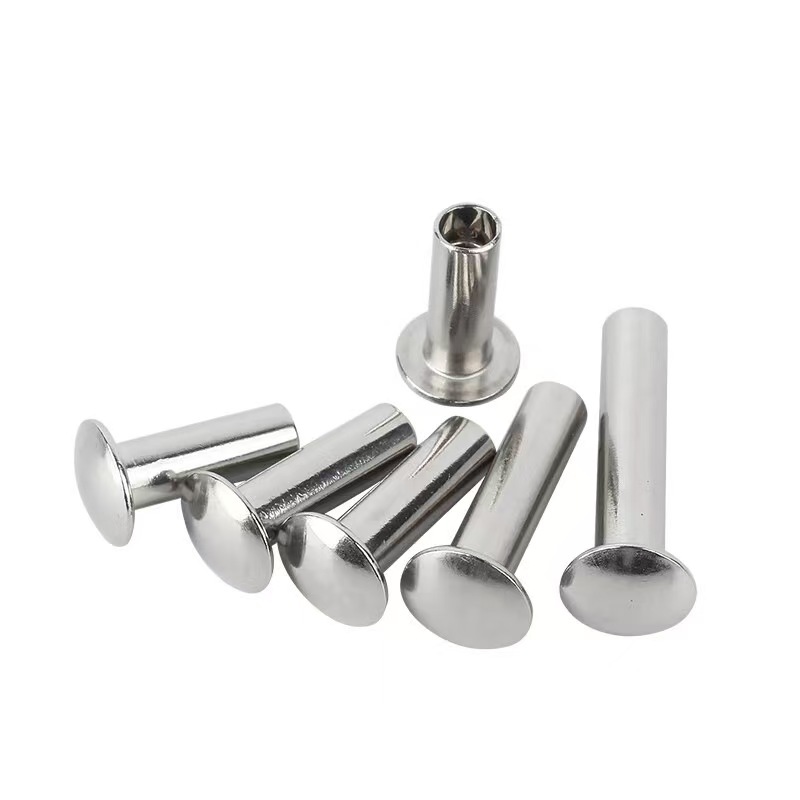
- Semi-tubular rivets — partially hollow shank that curls under low setting force, keeping distortion low in thin or plated sheet. Common in hinges, latches, electrical assemblies and appliance hardware.
- Blind open-end rivets — mandrel pulled from one side; the sleeve expands inside the hole and the mandrel breaks at the notch. The practical choice for enclosed panels, ducts, cabinets and housings.
- Structural rivets — large-diameter, high-shear variants in steel and stainless for rail, marine and industrial fabrication where the joint works under dynamic load.
| Rivet type | Setting method | Materials | Standards we produce | Typical applications |
|---|---|---|---|---|
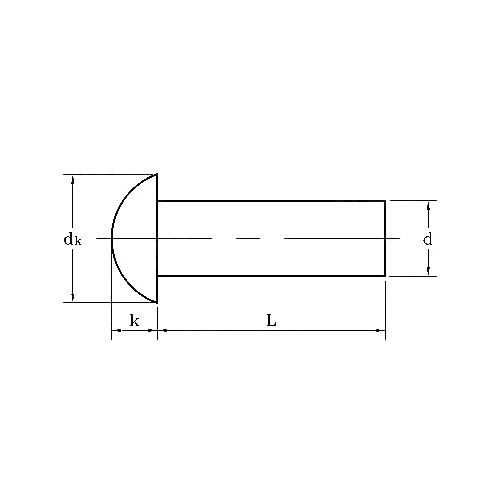
| Solid round head | Two-sided access; tail upset by hammer, press or rivet set | Carbon steel, stainless steel, aluminium, copper | DIN 660:2012; ASME/ANSI B18.1.3M:1983 | Frames, brackets, structural and general fabrication |
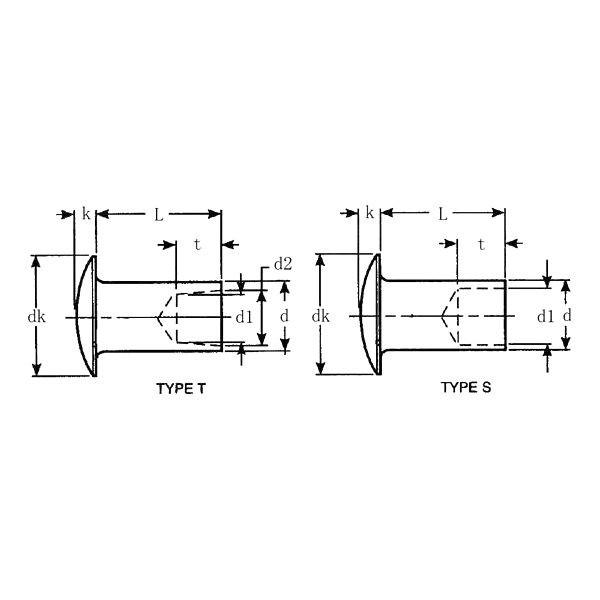
| Semi-tubular | Shank curls under low force; press or automatic rivet setter | Steel, stainless steel, aluminium, copper | DIN 6791:2011; ASME/ANSI B18.7:2001 | Hinges, latches, electrical assemblies, light-gauge sheet |
| Blind open-end | Mandrel pulled from one side; sleeve expands, mandrel breaks at notch | Aluminium, steel, stainless steel | DIN 7337 (A):1991; ASME/ANSI B18.30.1M:2000; ISO 15977 equivalent | Enclosed panels, ducts, cabinets, HVAC and appliance housings |
| Structural / large diameter | Heavy-duty setting tool; high-strength sleeve or retained mandrel | Steel, stainless steel | Produced to drawing and to DIN / ISO structural rivet dimensions | Rail, marine, trailer and industrial fabrication under dynamic load |
Materials, Coatings and Dimensional Standards
Material choice follows the service environment and the sheet it joins. We confirm the grade against the drawing rather than defaulting to the cheapest option.
- Carbon steel — general-purpose joints in painted or dry internal assemblies; supplied bare or plated.
- Stainless steel — wet, coastal and hygienic environments; supplied passivated for a clean surface.
- Aluminium — low weight and low setting force; paired with isolating washers when used against steel to limit galvanic corrosion.
- Copper — electrical, non-magnetic and decorative assemblies.
- Finishes — zinc plating, hot-dip galvanizing and blackening are handled in-house, so plated rivets keep their dimensional class after treatment.
Standard rivet dimensions follow DIN 660:2012, DIN 6791:2011 and DIN 7337 (A):1991 for metric round head, pan head semi-tubular and button head blind open-end forms, with the ASME/ANSI B18.1.3M, B18.7 and B18.30.1M equivalents for markets working to inch-series or metric ASME documents. Head form, diameter, length and grip range are restated on our approval drawing so the delivered part matches the joint, not only the catalogue line.
Matching a Rivet to the Joint
A rivet specification is only complete when the hole, stack and setting equipment are known. These are the variables we resolve with the customer before releasing a batch.
- Hole diameter and clearance — the shank must pass through with controlled clearance; oversize or punched holes with heavy burrs reduce shear capacity and leave a loose joint.
- Grip range — the rivet must cover the total thickness of the layers and still leave material to form the tail. Blind rivets are selected by grip range, not by body length alone.
- Head form — round, pan and button heads where a raised head is acceptable; countersunk forms where the drawing calls for a flush surface; large flange heads on thin or soft sheet.
- Material pairing — dissimilar metals are checked for galvanic risk, and isolation is specified where aluminium and steel meet in damp service.
- Joint geometry — edge distance, pitch and hole quality set the number of rivets per connection; these are normally stated on the assembly drawing and cross-checked with a sample set.
- Setting equipment — pneumatic and hydro-pneumatic rivet guns, nose assemblies, mandrel collection and automatic setters for high-volume semi-tubular or blind work. We match the rivet to the tooling already installed on the line.
Rivets sit inside a wider fastener programme. Structural connections that are bolted rather than riveted use our hexagon head bolts, supplied with matching Nuts and washers from the same inspection system, while our Bolts range covers the threaded side of the same assemblies.
Custom Rivets to Drawing or Sample
Non-standard rivets are core work rather than an exception. Our engineering team develops parts from a customer drawing or a physical sample, including special head diameters and heights, undercut shanks, non-standard lengths, stepped diameters and specific material grades. A dimensional drawing is returned for approval before batch production, and first-article parts can be submitted for fit checks on the assembly line.
Group capacity across our fastener lines exceeds 20,000 tons per year, with 12 production lines including an automatic shell moulding line and four heat treatment lines. More than 100 employees work in the group, among them over 10 engineers, so volume releases and smaller trial batches both run through the same process control.
Quality Control and Acceptance Testing
Total quality management runs through the whole route: inspection follows each operation, and finished rivets are finally checked to the customer requirement and the referenced standard before packing. Our in-house laboratory is equipped with a spectrometer, a coordinate measuring machine and an X-ray flaw detector, covering chemical composition, mechanical properties, non-destructive testing and geometric dimensions.
- Dimensional inspection of head diameter and height, shank diameter, length and grip range.
- Shear and tensile verification on solid and structural rivets; mandrel break-load checks on blind rivets.
- Plating thickness and appearance checks after surface treatment.
- Material certificates, dimensional reports and setting trials supplied with the shipment where the order requires them.
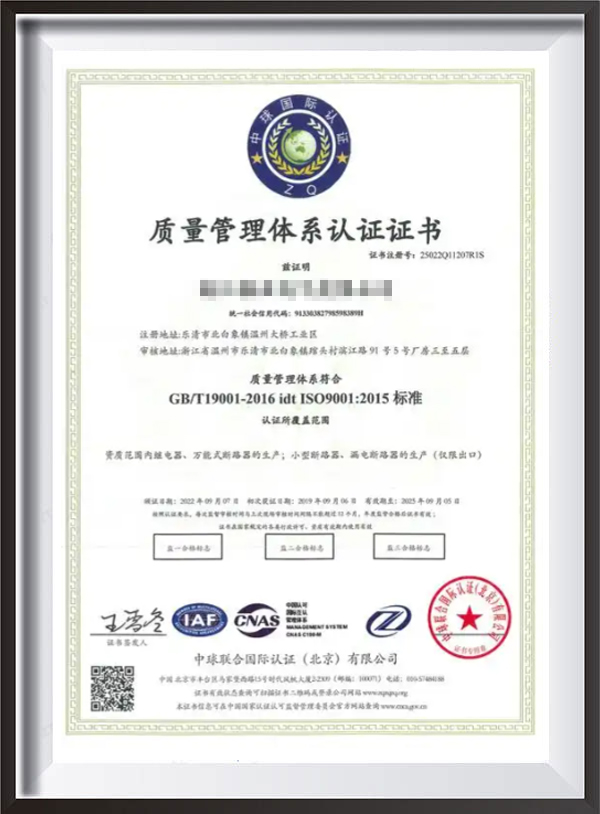
- ISO 9001 quality management, with the acceptance sample plan agreed at order confirmation.
Information We Use to Configure Your Solution
Our proposal is based on the working point of the joint and the way the part will be installed, not on a price list. Supplying the following data lets us confirm a rivet and quote without a second round of questions.
- Rivet type and the standard or drawing number to be followed.
- Material, grade and surface finish.
- Shank diameter, length or grip range, and head form.
- Hole diameter, total stack thickness and tolerance of the punched or drilled hole.
- Load direction — shear, tension or mixed — and any fatigue or vibration requirement.
- Access condition: one-sided or two-sided assembly, and the setting tool in use.
- Quantity per release and expected annual volume.
- Marking, packaging, labelling and any market-specific documentation needed.
- Destination port or Incoterms, so freight and delivery scope are quoted together with the parts.
Working-day enquiries receive a reply within 12 hours. Trade terms, tooling assumptions and packaging are confirmed in the quotation so the purchase order matches the technical agreement.
Packaging, Documentation and Delivery
Rivets are supplied in bulk bags, retail kits, blister packs, custom printed boxes or export cartons, depending on whether the goods go to a production line, a distribution warehouse or a retail shelf. Labels can carry the customer part number, batch reference and bar code.
Our base in Hangzhou sits 35 km from Shanghai and Ningbo ports, so sea freight is the standard route and air freight can be arranged for urgent lines. Documentation follows the order: packing list, invoice, material certificates and inspection reports. DDP delivery straight to the customer's door can be quoted when a project needs a single landed cost.
Frequently Asked Questions
What rivet types does Better Fastener produce?
We produce solid round head rivets, pan head semi-tubular rivets, blind open-end rivets and large-diameter structural rivets. Standard dimensions follow DIN 660:2012, DIN 6791:2011, DIN 7337 (A):1991, ASME/ANSI B18.1.3M:1983, ASME/ANSI B18.7:2001 and ASME/ANSI B18.30.1M:2000. Non-standard diameters, head forms, lengths and materials are made to drawing or sample.
How do we decide between a blind rivet and a solid rivet?
Access decides the family. A solid rivet needs a bucking surface behind the joint, so it suits open frames and fabrication where both faces can be reached, and it gives the highest shear capacity. A blind open-end rivet sets entirely from the front face, which is what makes it work on enclosed panels, ducts and cabinets.
Which materials and finishes are available?
Carbon steel, stainless steel, aluminium and copper are the standard rivet materials, with zinc plating, hot-dip galvanizing and blackening for surface protection; stainless parts are supplied passivated. Material and finish are confirmed against the service environment and the sheet being joined, including galvanic risk between dissimilar metals.
Can you manufacture rivets to our drawing or to a specific standard?
Yes. Custom development from a drawing or a physical sample is part of our normal production flow. We return a dimensional drawing for approval, produce a first article where the assembly is sensitive, and then run the batch under the same inspection sequence.
What information do you need to quote a rivet?
Rivet type or standard, material and finish, diameter, length or grip range, head form, hole diameter and stack thickness, load direction, access condition, quantity per release and per year, packing and labelling requirements, destination port or Incoterms, and the documentation your market requires.
How are rivets packed and shipped?
We pack in bulk bags, retail kits, blister packs, custom boxes or export cartons with customer part numbers and batch references. Shipments go by sea from Shanghai or Ningbo, with air freight available for urgent requirements and DDP delivery quoted when a single landed cost is preferred.





