


 English
  Español
  عربى
عربى 
As a Lifting manufacturer, Better Fastener Industry Co., Ltd. supplies forged eye bolts, shouldered eye bolts, swivel eye bolts and matching eye nuts that create rated attachment points for hooks, shackles, chains and slings. The range sits inside our Other Fasteners family, together with the bolts, nuts and washers we have produced since expanding beyond our washer origins in 2010.
Every item in this family is a load-bearing fastener, so the range is organised around defined threads, controlled materials and stated working loads rather than appearance alone. We select the eye form, material and finish from the actual working load, sling angle and mounting surface of the application, then supply the parts as one coordinated fastener package.
- Forged closed-ring eye bolts — full ring strength transmitted through the hinge point, with proof load verification available for safety-critical lifting.
- Shouldered eye bolts — a wide forged collar that seats against the workpiece face and stabilises angular pulls.
- Swivel eye bolts — 360° ring rotation that prevents twist accumulating in sling legs during rigging and load movement.
- Eye nuts — the counterpart where the threaded stud belongs to the equipment rather than to the fastener.
Our Lifting Range and Where Each Type Fits
Thread size, ring form and load behaviour decide which eye fastener suits a lift. Standard eye bolts, collar patterns and swivel bodies are produced in metric coarse, UNC and BSW threads, with eye nuts following the corresponding nut standards so they thread onto studs already fitted to a machine or fixture.
| Product type | Thread and standard | Material | Loading behaviour | Typical fit |
|---|---|---|---|---|
| Forged ring eye bolt | Metric coarse to DIN 580 and equivalents | Carbon steel, A2/A4 stainless | Rated for axial pull; capacity falls as the load leaves the bolt axis | Moulds, machine tools, transport frames, plant handling |
| Collar / shouldered eye bolt | BS 4278 pattern, imperial and metric | Carbon steel, stainless steel | Forged flange seats on the face and stabilises off-axis loading | Angled lifts, timber structures, marine deck hardware |
| Swivel eye bolt | Metric and imperial rotating ring bodies | Carbon steel, A2/A4 stainless | Ring turns under load, preventing twist build-up in sling legs | Multi-point rigging, load re-orientation, assembly frames |
| Eye nut | DIN 582 and equivalent specifications | Carbon steel, A2/A4 stainless | Creates a lifting point on an existing threaded stud | Studded equipment, machinery anchors, fabricated steelwork |
Where a project mixes eye bolts with standard threaded fasteners, the same production base supplies the thread rods, nuts and washers that complete the joint.
Application Fit Across Lifting and Handling Work
Lifting fasteners are used wherever equipment is repeatedly raised, turned or repositioned. The applications below reflect the industries our fastener programme already serves.
- Machine tools, moulds, dies and heavy fixtures lifted by crane or hoist.
- Precast concrete elements, steel frames and structural modules during fabrication and transport.
- Pumps, motors, transformers and process equipment handled in petrochemical and power installations.
- Marine and offshore deck hardware, mooring fittings and dock equipment.
- Rail and rolling stock components, construction, mining and agricultural machinery assemblies.
- Transport frames, stillages and shipping cradles where an eye nut replaces a welded lug.
Materials, Finishes and Dimensional Standards
Material selection follows the environment and the load path. Carbon steel covers general industrial lifting, while stainless steel is chosen where moisture, wash-down or chemical exposure would shorten the life of a plated part.
- Carbon steel forged bodies supplied self-colour, zinc plated for indoor service or hot-dip galvanized for outdoor and marine exposure.
- Stainless steel A2 (304) and A4 (316) for corrosive, hygienic and coastal applications.
- Blackening and other post-treatments available where a specific surface finish is specified.
- Metric coarse, UNC and BSW threads, with fine pitch on request.
- DIN 580 eye bolts, BS 4278 collar eye bolts, DIN 582 eye nuts and equivalent national specifications, plus drawing-based production.
Rated Load, Angular Pull and Proof Verification
The rated working load applies when the pull runs in line with the bolt axis. As the sling angle moves away from that axis the permissible load on the eye falls, and where the direction becomes largely lateral a plain eye bolt is no longer the correct component — a shouldered or swivel design, or a different attachment, carries the load instead.
- Working load and thread size are marked on the ring, and production batches remain traceable to the manufacturing lot.
- For safety-critical lifts, proof load testing is arranged and the corresponding records are issued with the shipment.
- Angled lifts are rated from the tabulated values for the eye type, never from the axial figure.
- Multi-leg slings raise the load carried at each point according to the angle factor, so the number of points and the sling geometry are fixed before the eye is selected.
- Eye bolts are never straightened, welded, heated or re-threaded; a ring showing permanent set is taken out of service.
Installation, Matching Hardware and Serviceability
Correct seating matters as much as the rating. A shouldered eye bolt bears on its collar, so the tapped hole is counterbored or the surface faced flat before assembly; a plain eye bolt is turned in until the thread is fully engaged in the receiving part.
- Thread engagement depth is set with the receiving material in mind — deeper in castings and softer alloys than in steel.
- Through-bolted arrangements use matching nuts and washers from our own production where the seating surface is uneven.
- Eye bolts are inspected before each lift for ring wear, thread damage, corrosion pitting and permanent deformation.
- Threads are kept clean and lightly lubricated; damaged threads are replaced rather than recut.
- Spare eye bolts, nuts and washers can be supplied as an ongoing line item so replacement parts match the original batch specification.
Configuration Options, Packaging and Order Scope
Lifting items are configured from the drawing, the mounting detail and the lift study rather than from a catalogue number alone. Our engineering team develops parts from customer drawings or samples, and our production base covers both standard sizes and drawing-based runs.
- Thread size and pitch, shank length and ring inside diameter.
- Collar diameter for shouldered types and ring rotation for swivel types.
- Material grade, surface finish and coating thickness where specified.
- Marking of working load, thread size, batch number or customer part number.
- Export cartons, blister packs, retail kits and customer-branded boxes.
- Consolidated shipment with bolts, nuts and washers from the same production programme.
Quality Control and Acceptance Documentation
Our in-house laboratory and inspection stations verify lifting fasteners at several points between raw material and packing. Chemical composition is checked on a spectrometer, mechanical properties are tested on sampled lots, and critical parts can be examined by X-ray flaw detection. Dimensional verification with a coordinate measuring machine confirms ring geometry, thread form and collar dimensions against the standard or the drawing.
- Inspection after each production process, with 100% final inspection of finished goods.
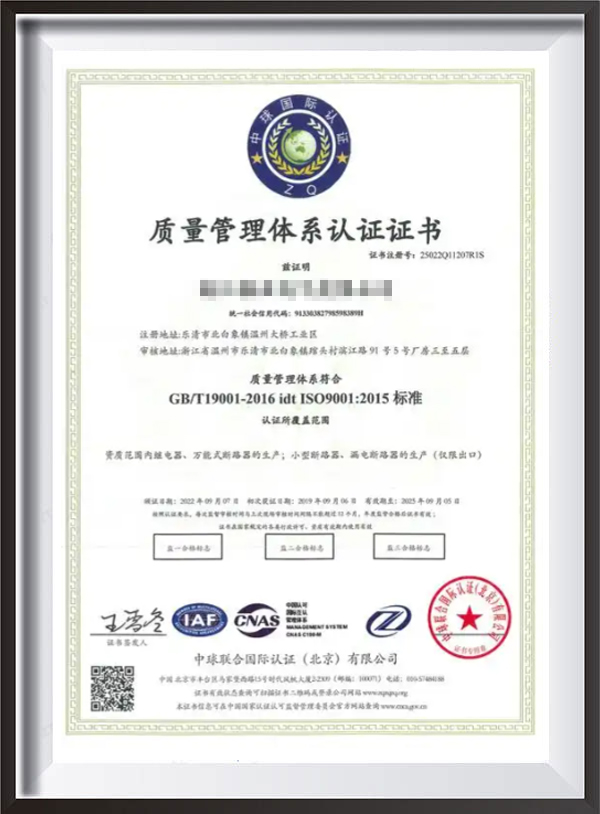
- Quality management aligned with ISO 9001 across the fastener manufacturing facilities.
- Annual capacity exceeding 20,000 tons across 12 modern production lines, which supports large-volume programmes and repeat batch orders.
- Inspection records, material data and proof load reports issued as agreed at order stage.
Information We Use to Configure Your Solution
| Project input | How it shapes the configuration |
|---|---|
| Load weight, centre of gravity, number of lifting points | Sets the working load required per eye and the number of attachment points |
| Sling angle and pull direction | Determines whether a plain, shouldered or swivel eye form is supplied and the permissible load per point |
| Thread size, pitch and tapped hole depth | Fixes shank dimensions, engagement length and collar seating arrangement |
| Mounting surface and receiving material | Decides between shouldered and plain eye bolts and whether a washer is needed |
| Service environment and temperature | Selects carbon steel with plating or hot-dip galvanizing against A2/A4 stainless |
| Standard, marking and traceability requirements | Aligns dimensions and ring marking with DIN 580, BS 4278 or the customer drawing |
| Quantity, packing format and destination | Drives batch planning, export carton or retail packing, and the shipping schedule |
Frequently Asked Questions
Do you supply eye bolts and eye nuts as one order?
Yes. The Lifting range covers forged eye bolts, shouldered and swivel eye bolts and eye nuts in carbon steel and A2/A4 stainless, and matching nuts and washers come from the same production programme, so a lifting point can be supplied complete.
Which standards do you manufacture to?
DIN 580 eye bolts, BS 4278 collar eye bolts, DIN 582 eye nuts and equivalent national specifications, together with parts produced directly from customer drawings or samples.
Can you provide proof load certification?
For safety-critical industrial and marine lifting, proof load verification is arranged and the records are issued with the batch, linked to the working load and thread size marked on the ring.
Can lifting eye bolts be used at an angle?
The rated load applies to axial pull only. Angular lifts reduce the permissible load and are rated from the tabulated values for the eye type; shouldered and swivel designs are used where the pull leaves the bolt axis, and strongly lateral pulls need a different attachment arrangement.
Do you produce custom eye bolts from drawings or samples?
Customized development is our core business. We work from drawings or samples and can vary thread, shank and ring dimensions, material, finish, marking and packing to match the assembly.
How are lifting fasteners packed and shipped?
Export cartons are standard, with blister packs, retail kits and customer-branded boxes available. Shipments move by sea through Shanghai and Ningbo, with air freight arranged for urgent deliveries.
Related Products and Categories
Our portfolio also includes Bolts for applications with different operating ranges, interfaces or integration requirements.





