


 English
  Español
  عربى
عربى 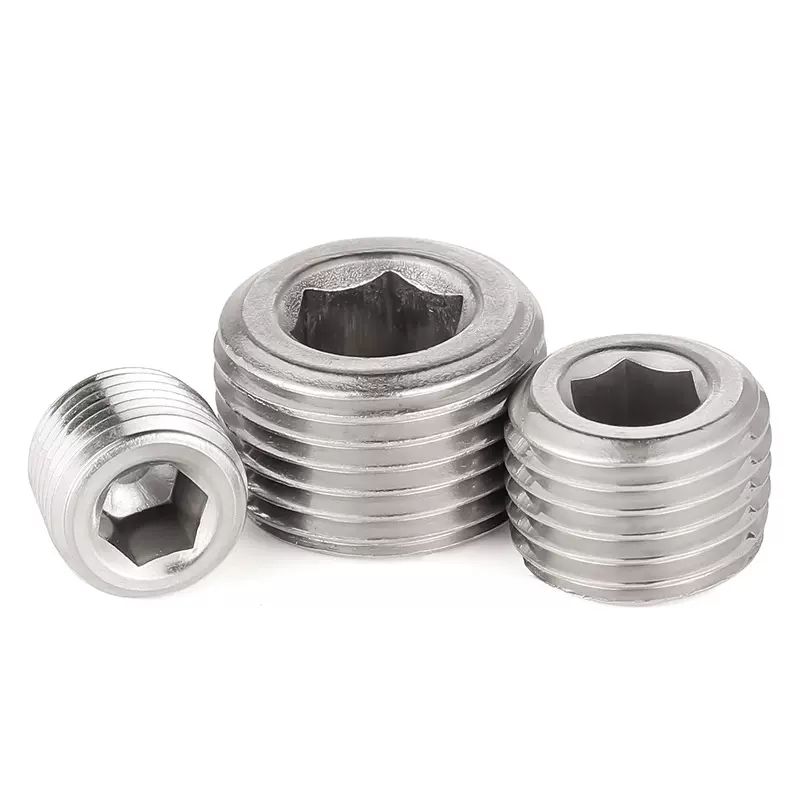


Better Fastener Industry Co., Ltd. manufactures pipe and tube screw fasteners — pipe plugs, sealing plugs, thread bushings, locknuts and worm drive hose clamps — for pressure-tight joints in hydraulic, pneumatic, water supply and gas transmission pipework. We produce them in carbon steel and stainless steel to BSP, NPT, ISO 7 and DIN 2999 equivalent thread specifications, in nominal pipe sizes from 1/8 in through 4 in. Thread form, material, coating and sealing method are resolved from the working medium, pressure class and temperature of the joint, not from size alone.
Operating our own nut, bolt, washer and screw workshops, we supply pipe port hardware together with the Nuts and Bolts that sit on the same manifold, pump or valve assembly, which keeps thread gauges, material grades and coatings aligned across a bill of materials.
Our Pipe/Tube Screw & Nuts Range
The released range covers ports, plugs and clamps in the thread systems most often specified on hydraulic power units, pneumatic manifolds, process skids and utility pipework.
- DIN 906:2020 Internal Socket Pipe Plug — tapered-thread plug driven by an internal hex key, with a low head profile for flush port sealing on housings, gearboxes and manifolds.
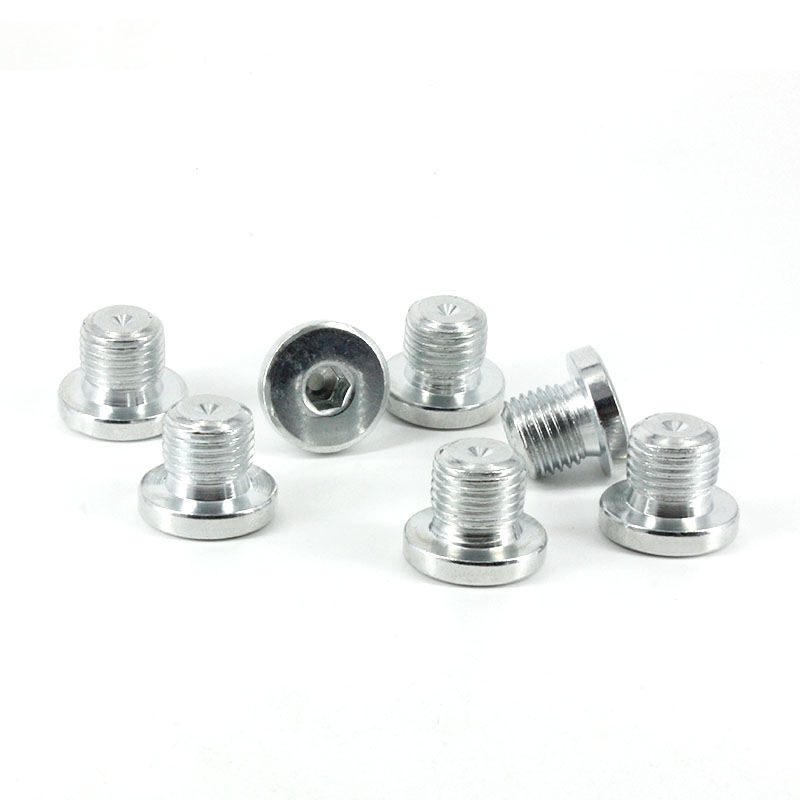
- DIN 908:2020 Internal Socket Sealing Plug — socket-drive plug with a collar that seats a sealing element against a parallel-thread port, so the port can be opened and re-closed during service.
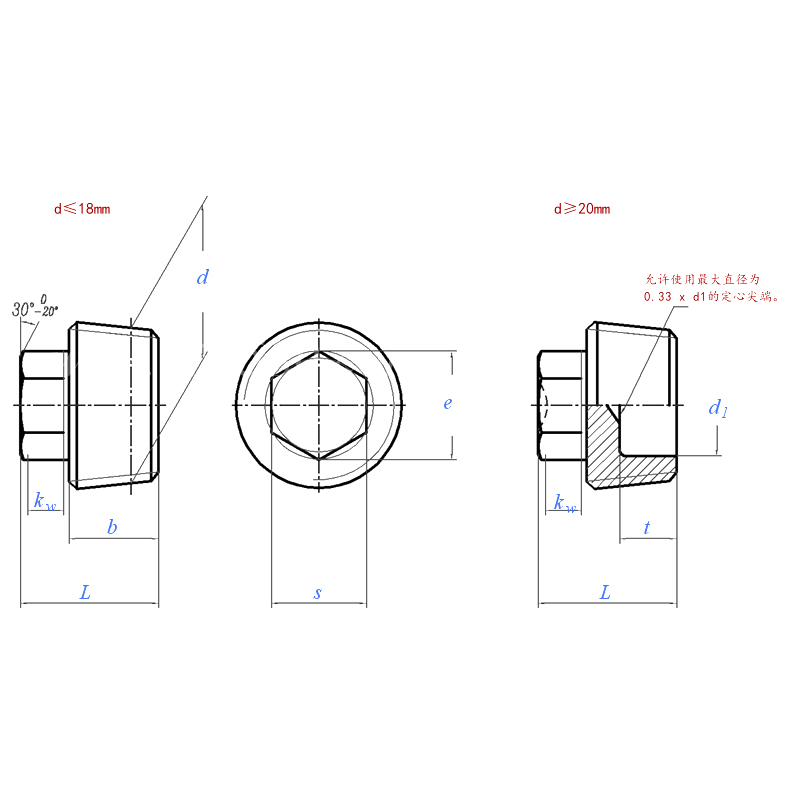
- DIN 909:2020 Hex Head Pipe Plug — external hex head for wrench make-up on tapered threads, used where the plug must sit proud of the housing or be removed frequently.
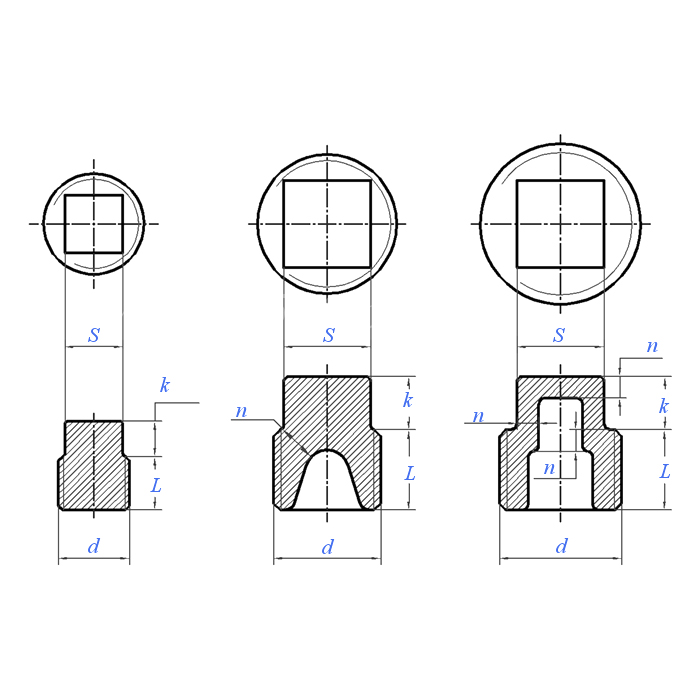
- ASME B16.14:2018 Pipe Thread Bushing, Locknut and Square Head Plug — inch-series port hardware for reducing and blanking threaded openings and for locking bushings into position.
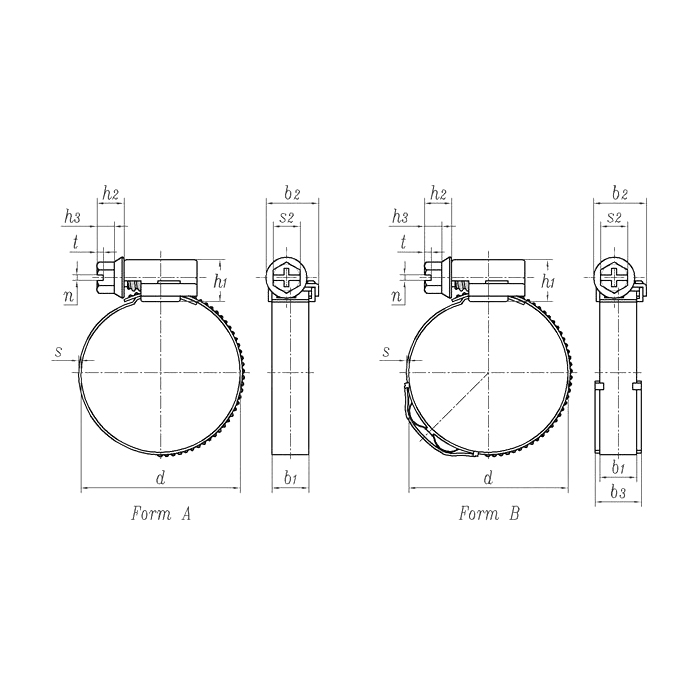
- DIN 3017-1:2021 Worm Drive Hose Clamp — band and worm screw clamp for securing hose onto tube and nipple connections in cooling and low-pressure utility circuits.
| Item | Drive / Body | Sealing Principle | Typical Fit |
|---|---|---|---|
| DIN 906 internal socket pipe plug | Internal hex socket | Tapered thread make-up, with sealant or PTFE tape filling residual micro-gaps | Compact blanking of hydraulic, pneumatic and gearbox ports |
| DIN 908 internal socket sealing plug | Internal hex socket with collar | Parallel thread closed against a sealing element at the collar | Serviceable ports that are opened repeatedly during maintenance |
| DIN 909 hex head pipe plug | External hex head | Tapered thread make-up with controlled wrench torque | Water, gas and general pipework requiring external wrench access |
| ASME B16.14 bushing, locknut and square head plug | Bushing body, locknut, square head | Tapered NPT thread make-up | Inch-series valve, fitting and vessel ports |
| DIN 3017-1 worm drive hose clamp | Band with worm screw housing | Radial clamping force on the hose wall | Hose-to-tube connections, coolant and return lines |
Tapered and Parallel Threads: Where Each Type Fits
Sealing behaviour is set by the thread form and the way the joint is closed, which is why we confirm the port standard before quoting a plug or bushing. The Pipe/Tube Screw & Nuts manufacturer selection below shows how the four common port systems differ in service.
| Thread Form | Common Reference | How the Joint Seals | Practical Notes |
|---|---|---|---|
| Tapered pipe thread, NPT | ASME B1.20.1 | Wedge interference as the taper tightens; sealant fills residual micro-gaps | Inch-series ports on North American equipment; engagement depth controls the seal |
| Tapered pipe thread, BSPT | ISO 7-1, DIN 2999 equivalent | Same wedge principle with a 55° thread form | Common on European hydraulic, water and gas fittings |
| Parallel pipe thread, BSPP | ISO 228-1 | Face gasket, bonded seal or O-ring at the shoulder | Repeatable assembly and disassembly with controlled crush on the seal |
| Metric parallel port thread | DIN 3852 port form | Bonded seal or O-ring at the plug shoulder | Standard on many hydraulic valve and manifold ports |
Materials, Coatings and Chemical Compatibility
Pipe plugs, bushings and locknuts are produced in carbon steel and stainless steel, with low-alloy steel grades available across our fastener production. Material and coating selection follows the medium, the outdoor or indoor duty and the finish already applied to the mating housing.
- Carbon steel for general water, air and oil service where a protective coating is maintained.
- Stainless steel for washdown areas, humid environments and fluids that attack zinc-coated surfaces.
- Low-alloy steel grades where higher mechanical properties are required in the fastener assembly.
- Post-treatment processes including zinc plating, hot-dip galvanizing and blackening, matched to the housing finish and service conditions.
- Sealing elements specified with the temperature range and medium compatibility of the parallel-thread joint.
Where a joint combines a tapered plug with a coated housing, we confirm thread engagement, torque approach and sealant compatibility so the plating is not damaged during make-up.
Where These Fasteners Are Used
Pipe thread fasteners close, reduce or blank threaded ports, so they appear wherever fluid or gas pipework meets a component body. Our parts serve the following duty profiles:
- Hydraulic power units, valve blocks and manifolds — plugs and sealing plugs on metric and SAE port forms.
- Pneumatic circuits and air preparation units — blanking of unused ports on filters, regulators and cylinders.
- Water supply, pumping and utility pipework — tapered plugs, bushings and square head plugs in NPT and BSPT sizes.
- Gas transmission and petrochemical service — stainless and coated carbon steel parts for corrosive or high-temperature lines.
- Rail transportation, automotive manufacturing, construction and mining machinery, agricultural equipment and shipbuilding — drain, fill and inspection port hardware.
Quality Control and Acceptance
We run inspections after each production operation and a 100% final inspection against customer requirements and international standards. Our in-house laboratory is equipped with a spectrometer, CMM and X-ray flaw detector, covering chemical composition, mechanical properties, non-destructive testing and geometric dimensions — including the thread gauging that decides whether a tapered plug seals at the specified engagement.
- Thread form, pitch and gauge verified against the designated standard: NPT, BSPT, BSPP or metric parallel.
- Dimensional inspection of head, socket, collar and body across the lot.
- Material verification by spectrometer at the start and end of the production run.
- Non-destructive examination where the application calls for it.
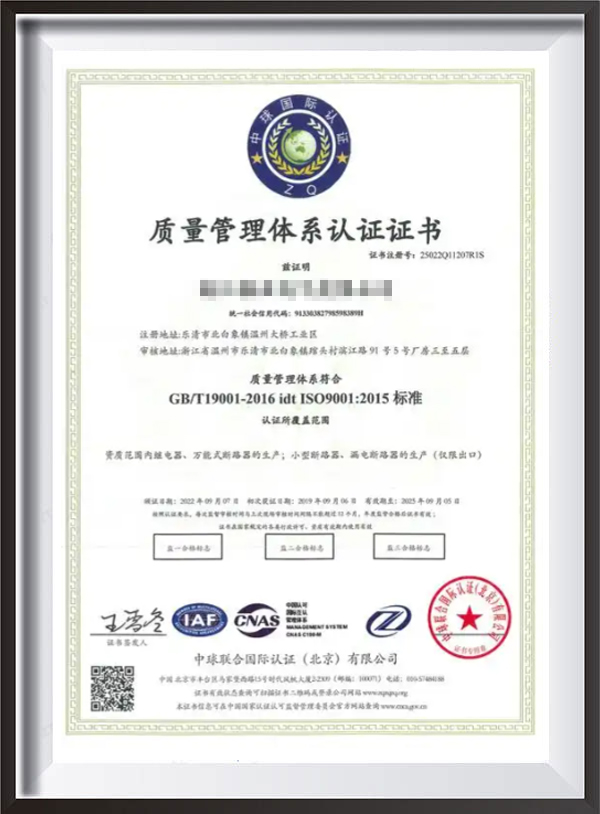
- Quality management aligned with ISO 9001, with annual output above 20,000 tons across our modern production lines.
Customization, Packaging and Delivery
Custom development is core business for us. We build pipe plugs, bushings and special port hardware from customer drawings or samples, covering non-standard lengths, alternative head forms, coating combinations and mixed material lots. Our engineering team reviews the drawing, agrees the material grade and coating, and follows the part through to sample approval.
- Bulk export cartons, retail kits, blister packs and printed private-label boxes.
- Sea freight as standard shipment, with air freight arranged for urgent lines.
- DDP delivery to door where the project requires a landed arrangement.
- Loading from the Shanghai and Ningbo port complex, within a two-hour drive of our operations.
Information We Use to Configure Your Solution
A pipe port quotation is prepared from a short, defined set of inputs. When these are known, we can confirm thread form, body geometry, material and packaging without a second round of questions.
| Project Input | Why It Matters | What We Confirm |
|---|---|---|
| Pipe size and thread designation (1/8 in to 4 in) | Sets body geometry and thread gauge | Thread form, pitch and gauge standard |
| Working medium and pressure class | Determines sealing method and material | Tapered or parallel thread, sealing element type |
| Operating temperature range | Limits seal material and coating choice | Seal compound and surface treatment |
| Corrosion environment and mating housing finish | Governs grade and plating compatibility | Carbon steel, stainless steel or low-alloy grade |
| Drive interface and access clearance | Controls head or socket geometry | Internal socket, hex head or square head |
| Quantity, packaging and marking | Drives production planning and pack format | Cartons, kits, private-label printing |
| Delivery point and trade terms | Determines shipping route and documentation | Port of loading, air or sea, DDP option |
Frequently Asked Questions
Which pipe thread standards can Better Fastener supply?
We produce pipe plugs, sealing plugs, bushings, locknuts and clamps to NPT, BSPT (ISO 7 and DIN 2999 equivalent), BSPP (ISO 228) and metric parallel port forms, with released items including DIN 906, DIN 908, DIN 909, ASME B16.14 and DIN 3017-1.
What size range do you cover?
Standard pipe sizes run from 1/8 in through 4 in. Larger sizes, intermediate diameters and non-standard body lengths are handled through custom development from drawings or samples.
Which materials and finishes are available?
Carbon steel and stainless steel are our main pipe port materials, with low-alloy steel grades available elsewhere in our fastener range. Surface finishes include zinc plating, hot-dip galvanizing and blackening, selected with the medium and the mating housing finish.
How does sealing differ between tapered and parallel threads?
A tapered thread seals through wedge interference as the plug tightens into the port, with sealant or PTFE tape filling residual micro-gaps. A parallel thread closes against a face gasket, bonded seal or O-ring at the shoulder, which keeps the joint serviceable through repeated assembly cycles.
Can you produce non-standard plugs and bushings?
Yes. Customized production is a core part of our business, and our engineering team develops parts from customer drawings or physical samples, including special head forms, collar dimensions, coatings and mixed material lots.
How is quality verified before shipment?
Inspection is carried out after each production operation, with 100% final inspection against customer requirements and international standards. Our laboratory uses a spectrometer, CMM and X-ray flaw detector to cover chemical composition, mechanical properties, non-destructive testing and dimensional accuracy, under a quality system aligned with ISO 9001.
Related Products and Categories
Our portfolio also includes Hexagon Head Bolts for applications with different operating ranges, interfaces or integration requirements.





