


 English
 Español
 عربى
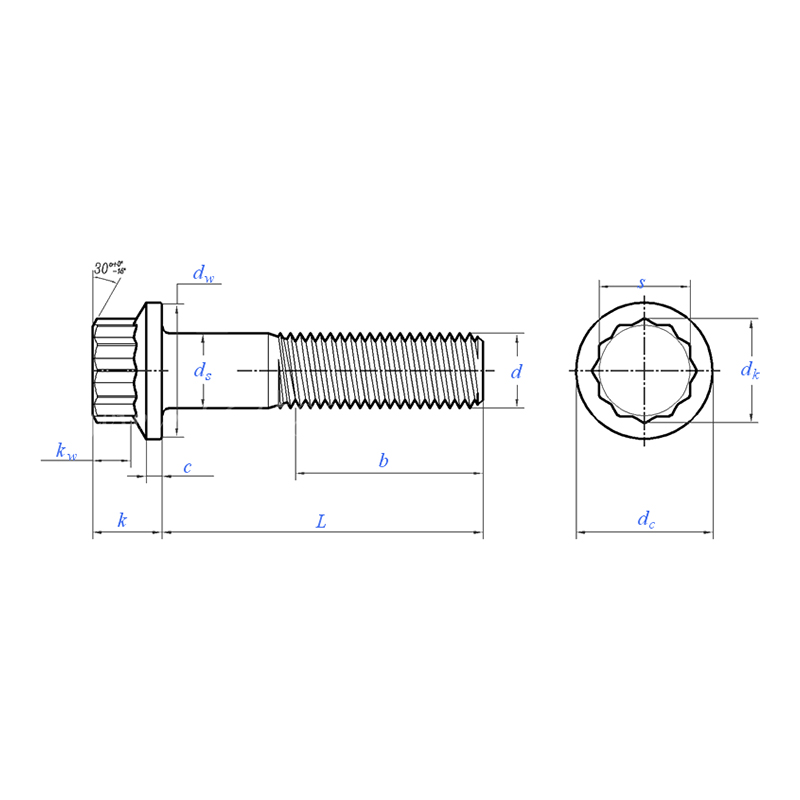

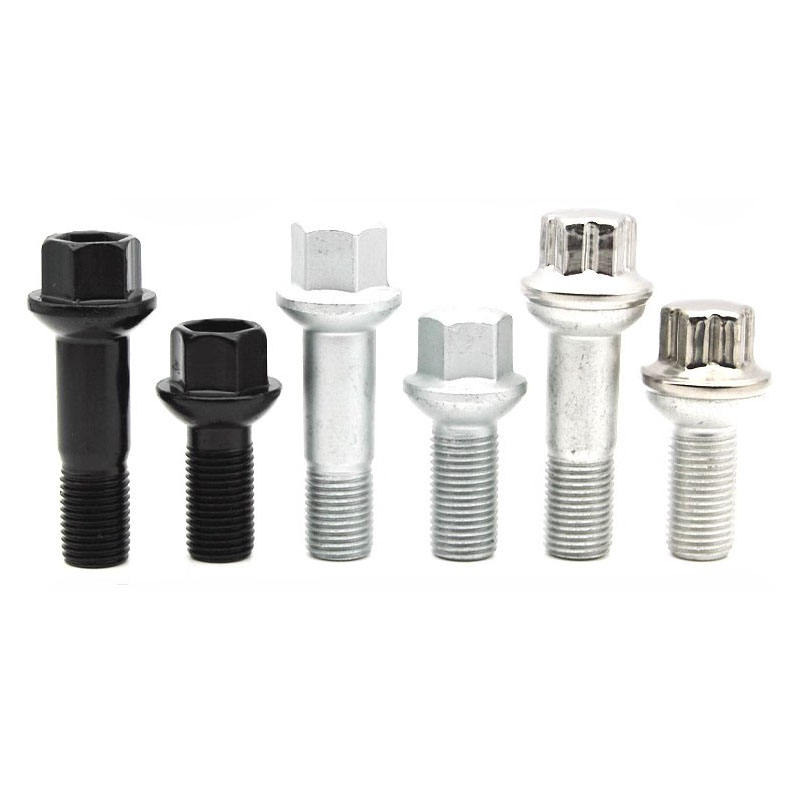

Better Fastener Industry Co., Ltd., one of China's established Custom Wheel Bolts/Spline Head Bolts Manufacturers, produces Wheel Bolts/Spline Head Bolts for passenger cars, light commercial vehicles, trucks, trailers and off-road equipment. The range covers tapered-seat and spherical-seat wheel bolts, 12-point flange spline head bolts and OEM-specific seat geometries produced to ISO 898, DIN 74361 and customer drawings.
Wheel bolts carry the full dynamic load path between wheel and hub flange. Braking torque, cornering forces, road shock and off-road impact all pass through the seat and shank, so we build this range around seat fit, shank strength and repeatable torque-to-tension behaviour rather than general-purpose bolt geometry.
What We Manufacture in This Range
As a Wheel Bolts Spline Head Bolts manufacturer, we match product configuration to the application, operating limits, interfaces and acceptance criteria defined for each project.
Our wheel bolt programme is organised by seat type and head form, because those two features determine whether a bolt centres the wheel correctly and whether the assembly reaches the specified clamp load at the specified tightening torque.
Tapered Seat Wheel Bolts
Conical seat mating with the wheel hole to centre the rim on the hub and develop frictional clamping. Common on passenger car and light commercial steel and alloy wheels.
Spherical Seat Wheel Bolts
Ball-seat geometry to DIN 74361-2 (G) Type G, used where the wheel manufacturer specifies a spherical seat interface for centring and load transfer.
12-Point Flange Spline Head Bolts
Spline-drive flange head bolts to ASME B18.2.5M:2013, Class 12.9, for high-torque wheel and hub assemblies where a compact, high-strength head is required.
Seat Geometry and Why It Governs Performance
The seat is the functional heart of a wheel bolt. It must match the wheel hole angle and diameter closely enough to centre the rim, then hold that position under vibration without micro-movement that progressively releases preload.
- Centring: seat angle and diameter control radial location of the wheel on the hub.
- Friction: seat surface finish and coating determine the friction coefficient used in the torque specification.
- Contact area: an undersized or mismatched seat concentrates stress and can deform the wheel hole.
- Loosening resistance: correct seat contact plus specified clamp load is what prevents road-vibration loosening.
Materials, Grades and Surface Treatment
We produce wheel bolts in alloy steel and carbon steel, with strength grades selected against the vehicle category and the tightening torque the assembly is designed for. Higher grades and thickened shanks are used where bending, fatigue and impact demands exceed those of general-purpose bolts.
| Configuration Item | Options We Supply | Typical Application Fit |
|---|---|---|
| Material | Alloy steel, carbon steel | Passenger car, truck, off-road |
| Property class | Class 8.8, 10.9, 12.9 to ISO 898 | Higher class for high-torque hub assemblies |
| Seat form | Tapered (conical), spherical to DIN 74361-2 (G) | Matched to wheel hole specification |
| Head form | Hex head, 12-point flange spline head to ASME B18.2.5M | Standard service and compact high-torque joints |
| Finish | Zinc electroplating, phosphate coating | Corrosion resistance with stable friction coefficient |
| Thread | Metric coarse and fine series, OEM thread callouts | Hub flange thread matching |
Zinc electroplating and phosphate coating are our standard finishes. Both are selected not only for corrosion resistance but because they give a consistent friction coefficient, which is what makes a published tightening torque produce the intended clamp load across a production run.
Strength, Fatigue and Load Conditions
Wheel bolts operate under conditions that general-purpose fasteners are not designed for. Braking generates thermal cycling, cornering applies lateral bending, and road or off-road impact produces short-duration shock loads. The shank and thread root are the fatigue-critical zones.
- Thickened shanks and controlled thread run-out reduce stress concentration at the shank-to-thread transition.
- Heat treatment is controlled to achieve the specified class while retaining enough ductility for impact loading.
- Thread rolling rather than cutting improves fatigue performance at the thread root.
- Coating thickness is controlled so it does not alter the effective thread fit or seat contact.
Standards We Work To
Wheel bolts are specified by standard plus OEM drawing, and both matter. The standard fixes material, mechanical properties, thread tolerance and marking; the OEM drawing fixes seat geometry, shank length, head form and finish.
- ISO 898 for mechanical and physical properties of carbon and alloy steel fasteners.
- DIN 74361-2 (G):2008 Type G spherical seat hex head wheel bolt.
- ASME B18.2.5M:2013 Class 12.9 12-point flange spline head bolt.
- OEM specifications for seat angle, shank diameter, thread length and finish.
Related Fasteners in Our Bolts and Nuts Range
Wheel bolts are usually supplied alongside matching wheel nuts and other chassis fasteners, so we consolidate them into one specification-led order. Our Wheel Nuts are produced to the same seat and finish logic as the bolt range, and our wider Bolts programme covers hexagon head, flange, countersunk and other head forms for hub, chassis and suspension joints.
Quality Control and Acceptance
We implement total quality management through the production process, with inspection after each operation and final inspection of finished products against customer requirements and international standards. Our laboratory is equipped with a spectrometer, CMM, X-ray flaw detector and additional testing equipment, covering chemical composition, mechanical properties, non-destructive testing and geometric dimensions — the standard buyers expect from a dedicated Wheel Bolts/Spline Head Bolts Factory.
- Chemical composition verification by spectrometer on incoming and in-process material.
- Mechanical property testing to confirm the specified property class.
- Dimensional and geometric inspection by CMM, including seat angle and shank diameter.
- Non-destructive testing by X-ray flaw detector where the application requires it.
- Final 100% inspection of finished products before packing.
Customisation, Packaging and Delivery Scope
Customised production is our core business. As a Custom Wheel Bolts/Spline Head Bolts Manufacturer, we develop and manufacture wheel bolts from customer drawings or physical samples, which is how most wheel bolt programmes are actually specified, since seat geometry rarely matches a catalogue item exactly.
- Drawing-based development covering seat form, shank length, thread and head marking.
- Sample-based reverse engineering where a drawing is not available.
- Post-treatment processes including hot-dip galvanizing and blackening for complex shapes and materials.
- Retail kits, blister packs, custom boxes and export cartons for different sales channels.
- Sea freight as the main mode, with air freight available for urgent deliveries.
Information We Use to Configure Your Solution
A wheel bolt quotation is only useful if it matches the actual joint. These are the inputs we work from when preparing a configuration and price.
| Input | What It Determines |
|---|---|
| Vehicle or wheel type | Seat form, head form, strength class |
| Thread size and pitch | Hub flange thread matching and engagement length |
| Seat angle and diameter | Centring accuracy and contact area |
| Shank length and diameter | Bearing length through the wheel and hub |
| Tightening torque and friction requirement | Property class and coating selection |
| Finish and corrosion requirement | Zinc electroplating, phosphate, hot-dip galvanizing or blackening |
| Annual volume and batch pattern | Production scheduling and packaging format |
| Marking and traceability requirement | Head marking, batch identification and documentation |
Frequently Asked Questions
Can you produce wheel bolts to our own drawing rather than a catalogue standard?
Yes. As Custom Wheel Bolts/Spline Head Bolts Manufacturers, customised production is our core business, and we develop and manufacture from customer drawings or physical samples. For wheel bolts this is the normal route, because seat angle, shank length and head marking are usually vehicle-specific.
Which standards do your wheel bolts and spline head bolts follow?
Our range covers ISO 898 property classes, DIN 74361-2 (G) spherical seat hex head wheel bolts and ASME B18.2.5M:2013 Class 12.9 12-point flange spline head bolts, plus OEM specifications where the customer drawing governs.
What finishes are available, and how do they affect tightening torque?
Zinc electroplating and phosphate coating are standard. Both are chosen to give a consistent friction coefficient so the specified tightening torque produces the intended clamp load. Hot-dip galvanizing and blackening are also available for suitable components.
How do you verify seat geometry and mechanical properties?
We inspect after each production process and carry out final inspection of finished products. Our laboratory uses a spectrometer for chemical composition, a CMM for geometric dimensions including seat features, and an X-ray flaw detector for non-destructive testing, alongside mechanical property testing.
Can wheel bolts and matching wheel nuts be supplied as one order?
Yes. We manufacture bolts, nuts and washers across several in-house facilities, so wheel bolts and matching wheel nuts can be consolidated into a single specification-led supply programme with consistent finish and seat logic.
What production capacity and delivery arrangements apply?
We operate 12 modern production lines with annual capacity exceeding 20,000 tons, which supports both large-volume programmes and small to medium batch purchases as a full-scope Wheel Bolts/Spline Head Bolts Factory. Sea freight is the main mode from Shanghai and Ningbo ports, with air freight available for urgent deliveries.


