


 English
 Español
 عربى
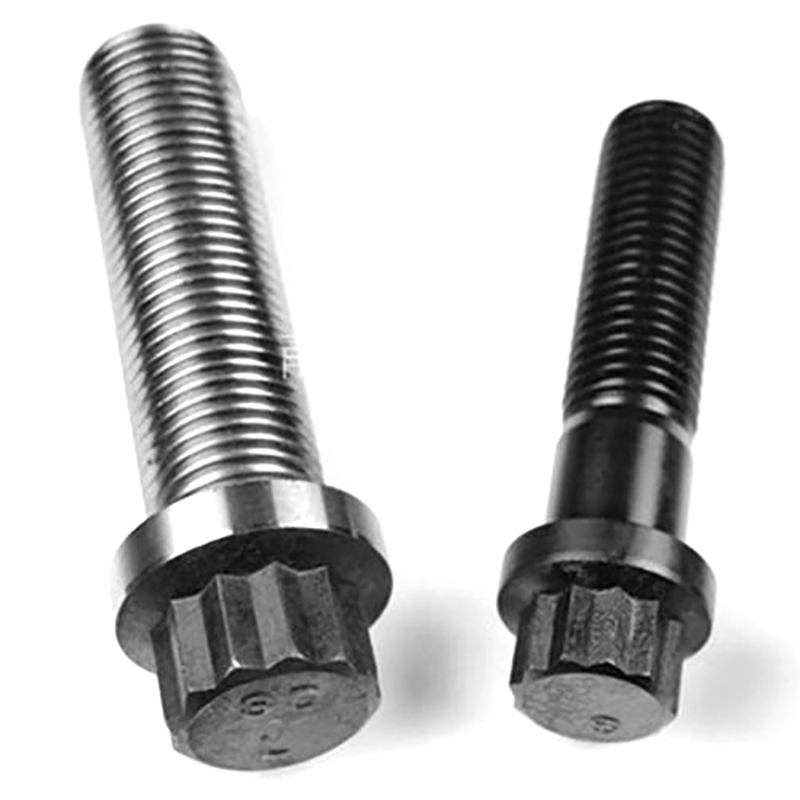

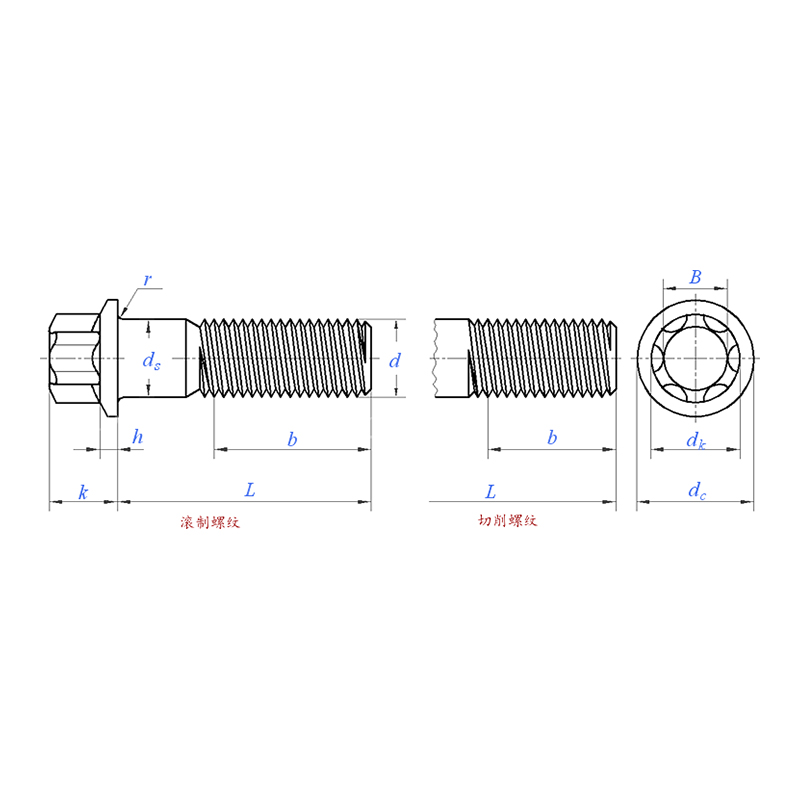

Better Fastener Industry Co., Ltd. manufactures External Hexalobular Flange Bolts for assemblies that need high torque transfer, a wide bearing footprint and a drive form that resists casual removal. The head combines a six-lobed external spline with an integrated circular flange, so the fastener clamps without a separate washer and holds its drive geometry through repeated power-tool cycles.
We produce these bolts in carbon steel and stainless steel to DIN 34800:2022 and ASME B18.2.1 (T9):2012, with zinc plating or dacromet coating, and we build the range around the joint data, drive tooling and inspection requirements of each project.
What the External Hexalobular Flange Bolt Is Built For
The external hexalobular head accepts a matching spline socket rather than a hex key or wrench. Six lobes engage the socket flanks over a larger contact area than a hex drive of similar head diameter, which raises the torque the head can carry before the corners deform. That matters on automated lines where rundown torque is set high and the same socket is used for thousands of cycles.
The flange under the head spreads clamping load across a wider bearing surface. It replaces a loose washer, removes one part from the bill of materials and keeps the friction condition under the head consistent from joint to joint. On thin panels, coated sheet and compact housings, that combination gives a flatter clamp load curve and less risk of surface pull-in.
- Drive geometry: external six-lobed spline, driven by a matching Torx-type socket; higher torque capacity than a comparable hex head with lower rounding risk.
- Tamper resistance: the specialised drive form requires the correct socket for installation and removal, which suits body panels, public fixtures and equipment enclosures.
- Integrated flange: distributes load over a wider bearing area and eliminates the separate washer.
- Compact envelope: the flange head keeps the bearing surface without the extra height of a washer stack, useful in tight clearance positions.
Standards and Dimensional Scope
We manufacture to the two reference standards most often called out for this head form. DIN 34800:2022 covers the small flange external hexalobular Torx bolt, and ASME B18.2.1 (T9):2012 covers the inch-series external hexalobular Torx screw. Both define head diameter, flange diameter, head height, thread and the spline geometry that the drive socket must match.
| Parameter | What We Confirm | Why It Matters in the Joint |
|---|---|---|
| Standard | DIN 34800:2022 or ASME B18.2.1 (T9):2012 | Sets head, flange and spline dimensions the socket must engage |
| Thread | Metric coarse or inch series, full or partial thread | Determines engagement length and clamp load per turn |
| Property class | Carbon steel grades and stainless steel grades per drawing | Matches proof load and tensile requirement of the assembly |
| Flange diameter | Standard or reduced flange per drawing | Controls bearing stress on the clamped panel |
| Coating | Zinc plating or dacromet | Corrosion protection and friction coefficient under the head |
| Inspection | Dimensional, chemical and mechanical checks per batch | Confirms the delivered lot matches the approved sample |
Materials and Coatings
Carbon steel covers the general structural and automotive body applications where strength and cost balance matter. Stainless steel suits exposed positions, wash-down areas and assemblies where the fastener must resist corrosion without a coating. Low-alloy steel is available where a higher property class is specified.
- Zinc plating: a general-purpose finish for indoor and sheltered joints, with a controlled friction condition for power-tool rundown.
- Dacromet: a zinc-flake coating for outdoor, road-facing and humid service where plating alone is not enough.
- Stainless steel: selected where the joint is exposed to moisture, cleaning agents or marine air.
- Post-treatment: hot-dip galvanizing and blackening are among the processes we run for fasteners of different shapes and materials.
Where These Bolts Fit
The head form is chosen when a joint needs a compact, high-torque, tamper-resistant fastener with a built-in bearing flange. Automotive body panels, battery and chassis brackets, public infrastructure fixtures, consumer electronics enclosures and general machinery covers are typical positions. The same geometry is used on rail transportation, construction machinery and agricultural equipment where vibration and repeated service access are present.
Because the flange replaces a washer, the joint design can be simplified: one part, one socket, one rundown step. For lines already using hex flange bolts, the external hexalobular version offers a higher torque ceiling and a drive that is harder to defeat with common hand tools.
Configuration Options
We build each order around the drawing or the sample, and we confirm the following variables before production.
- Thread size and pitch, metric or inch, full thread or part thread
- Length under head and thread length
- Head height, head diameter and flange diameter
- Spline size to match the customer's socket
- Property class or stainless grade
- Coating type and, where required, a friction coefficient target
- Point form, chamfer and thread tolerance class
- Marking and traceability requirements
Where the application calls for a related fastener, our range also covers Hexagon Flange Bolts and Hexagon Head Bolts for joints that do not need the spline drive.
Quality Control and Acceptance
Inspection runs through the process rather than only at the end. Chemical composition is checked on the spectrometer, mechanical properties are verified against the specified class, and geometry is measured with a coordinate measuring machine. An X-ray flaw detector supports non-destructive testing where the specification calls for it, and finished products are inspected before packing.
For project acceptance we work to the customer's inspection plan and the referenced standard. A typical submission includes dimensional records, material certificates, mechanical test results and coating thickness data, with sampling or 100% final inspection agreed at the order stage.
Installation, Tooling and Service
The socket must match the spline size defined by the standard or the drawing. A worn or undersized socket concentrates load on the lobe tips and is the usual cause of head damage, so tooling condition is part of a stable rundown process. Torque values follow the joint calculation and the friction condition of the selected coating.
For maintenance, the same socket removes the bolt without damaging the head, which keeps service access predictable over the life of the assembly. We supply replacement batches to the original specification so that field repairs match the production part.
Information We Use to Configure Your Solution
To prepare a quotation and a production plan, we need the joint and delivery data below. Drawings or physical samples are the fastest route to an accurate offer.
| Input | Detail We Need |
|---|---|
| Drawing or sample | 2D/3D drawing or a physical sample with the critical dimensions marked |
| Standard | DIN 34800:2022, ASME B18.2.1 (T9):2012 or a customer specification |
| Material and class | Carbon steel, stainless steel or low-alloy steel, with the required property class |
| Coating | Zinc plating, dacromet or another specified finish, with thickness or salt-spray target |
| Quantities | Annual volume, batch size and whether the order is a trial or series release |
| Inspection | Sampling plan, documentation package and any third-party inspection requirement |
| Packaging and delivery | Bulk cartons, retail kits or custom boxes, and the destination port or door |
Manufacturing and Supply Position
Better Fastener began as a washer factory in 2001 and expanded into a comprehensive fastener enterprise in 2010, integrating washers, nuts, bolts and spring nuts. Our production base runs 12 modern lines, including a fully automatic shell molding line and four heat treatment lines, with annual output above 20,000 tons. More than 100 employees, including over 10 engineers, support custom development from drawings or samples.
We are located within about 35 km of Shanghai Port and Ningbo Port, which keeps sea freight straightforward and allows air freight for urgent deliveries. Products are exported to more than 30 countries and regions, and our quality system is certified to ISO 9001.
Frequently Asked Questions
Can you manufacture external hexalobular flange bolts to our own drawing?
Yes. Custom development from drawings or samples is our core business. We confirm thread, head and flange dimensions, spline size, material, class and coating, then produce to the approved specification.
Which standards do you produce to?
We manufacture to DIN 34800:2022 for the small flange external hexalobular Torx bolt and ASME B18.2.1 (T9):2012 for the inch-series external hexalobular Torx screw, as well as customer-specific specifications.
What materials and coatings are available?
Carbon steel, stainless steel and low-alloy steel, with zinc plating or dacromet coating as standard options. Hot-dip galvanizing and blackening are also available for suitable parts.
How is quality verified before shipment?
Inspection is carried out after each process, and finished products are inspected before packing. Our laboratory uses a spectrometer, coordinate measuring machine and X-ray flaw detector to check chemical composition, mechanical properties, non-destructive integrity and dimensions.
What is the typical order and delivery arrangement?
Trade terms are confirmed at quotation. Batch production normally runs on a 30% deposit with the balance against the bill of lading copy, by T/T or negotiated L/C. Sea freight is the main mode, with air freight available for urgent deliveries.
Do you supply related fasteners for the same assembly?
Yes. Our range includes Hexagon Flange Nuts and other nuts, washers and screws, so a project can be consolidated into one supply program.





