


 English
 Español
 عربى
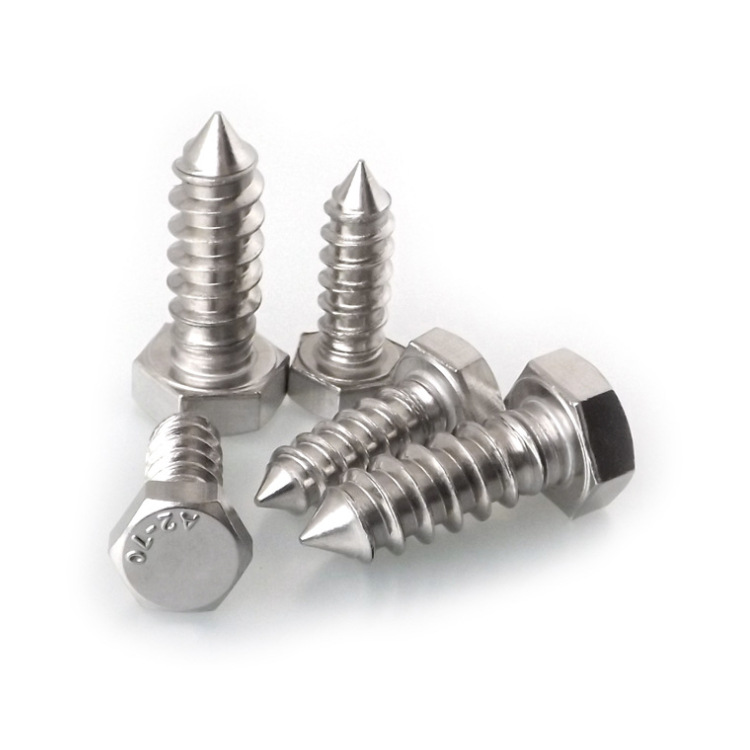


Better Fastener Industry Co., Ltd. is a Wood Screws manufacturer supplying coarse-thread, tapered-shank fasteners for furniture, cabinetry, timber framing, flooring and decking. We started in 2001 as a washer factory and expanded in 2010 into a comprehensive fastener enterprise covering screws, nuts, bolts and washers, so a wood screw program can be produced and shipped together with the mating fasteners, packed sets and export logistics a project needs.
Our wood screw range is organised by head form, drive recess and dimensional standard, covering DIN 95, DIN 96, DIN 97, DIN 7995, DIN 7996 and DIN 7997 alongside the ASME/ANSI B18.6.1 inch-series patterns and heavy hex head wood screws to DIN 571, ASME B18.2.1 (T15) and the NF E 25 series.
Our Wood Screw Range
A wood screw cuts and holds its own thread. The coarse, deep-pitch helix with a sharp crest penetrates wood fibre at low driving torque, while the unthreaded shank section draws the upper layer tightly against the base material as the thread advances into the substrate. Our standard range maps that behaviour onto the head styles, point forms and standards used in solid wood, plywood, MDF and engineered board.
| Standard | Head and drive | Typical application fit | Material options |
|---|---|---|---|
| DIN 96:2016 | Round head, slotted | General joinery where the head remains above the surface | Carbon steel, zinc plated |
| DIN 7996:2016 | Round head, Phillips | Volume furniture assembly with powered drivers | Carbon steel, zinc plated |
| DIN 97:2016 | Countersunk head, slotted | Flush cabinetry, flooring and panel fixing | Carbon steel, stainless steel |
| DIN 7997:2016 | Countersunk head, Phillips | Decking, cladding battens and flush board work | Carbon steel, stainless steel |
| DIN 95:2016 | Oval countersunk head, slotted | Trim and face fixing with a slightly raised head profile | Carbon steel |
| DIN 7995:2016 | Oval countersunk head, Phillips | Shopfitting and furniture trim | Carbon steel |
| ASME/ANSI B18.6.1 (T10, T11) | Pan head, slotted and Phillips | Inch-series drawings requiring a pan head profile | Carbon steel |
| ASME/ANSI B18.6.1 (T2, T3) | Countersunk head, slotted and Phillips | Inch-series flush fixing in cabinets and panels | Carbon steel, stainless steel |
| ASME/ANSI B18.6.1 (T6, T7) | Oval countersunk head, slotted and Phillips | Inch-series trim and decorative fixing | Carbon steel |
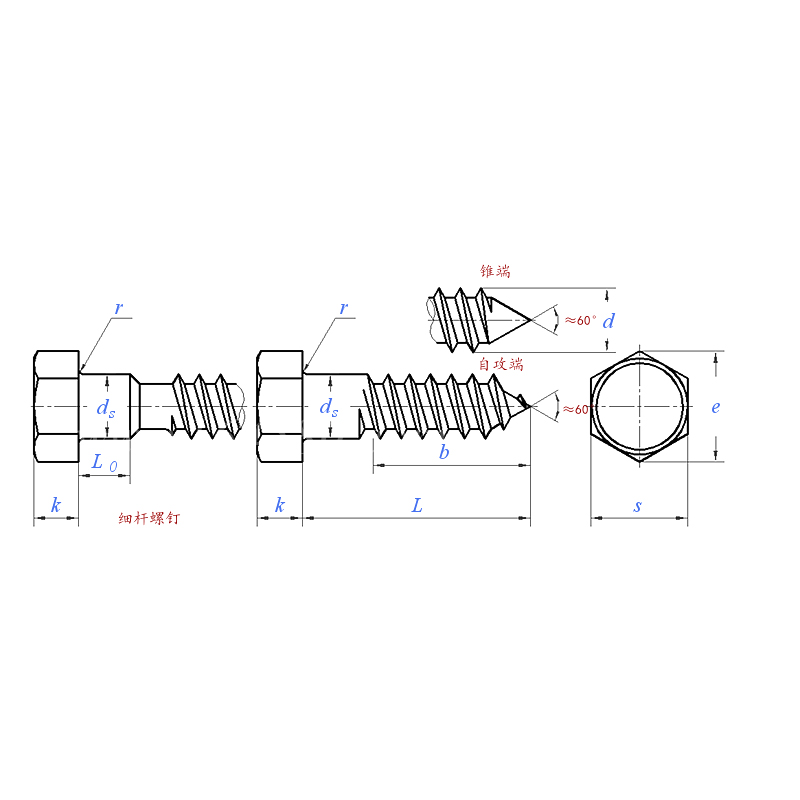
| DIN 571:2016, ASME B18.2.1 (T15):2012 | Hex head wood screw | Heavy timber and structural joints, wrench-driven with a washer | Carbon steel |
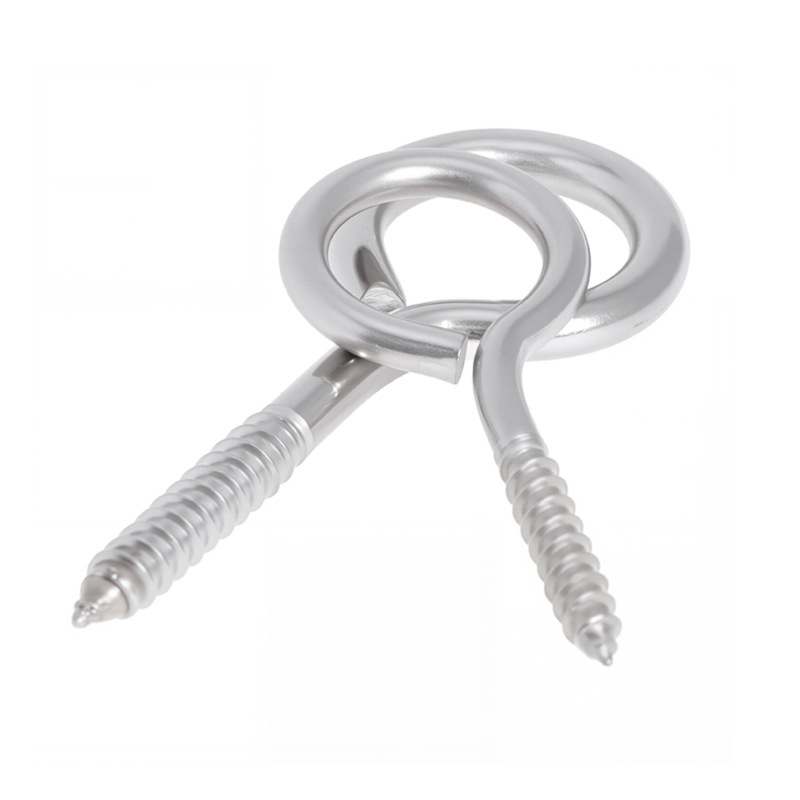
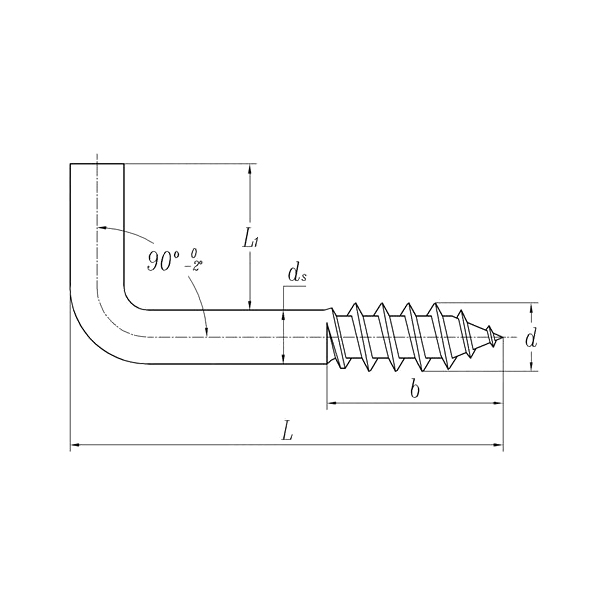
| NF E 25-609:1985, NF E 25-611:1985 | Eye wood screw, wood screw | French-standard market requirements and tension fittings | Carbon steel |
Head Forms, Drives and Installation Behaviour
Head selection is driven by the finished surface, the driving tool on the line and the bearing area the substrate can accept. Slotted heads suit traditional tooling and retrofit work; Phillips recesses take higher torque with less cam-out under powered drivers, which is why they dominate furniture and decking assembly.
- Countersunk head — seats flush into a prepared or self-countersinking recess, standard for cabinetry, flooring and panel work.
- Oval countersunk head — a slightly raised profile for trim and face fixing where the head is expected to stay visible.
- Round and pan head — a wider bearing area for softwood and board substrates that would otherwise crush.
- Hex head wood screw — wrench-driven for heavier timber connections, normally with a washer under the head.
- Point variants — sharp tapered points for direct driving into softwood; recessed self-countersinking points reduce or eliminate pre-drilling in dense hardwoods and engineered boards.
Materials, Coatings and Exposure Conditions
Wood screws leave our production in carbon steel with zinc plating, or in stainless steel where moisture, treated timber or outdoor service makes corrosion the governing factor. Coating is applied so that thread crests stay clean and driving torque does not rise unnecessarily. Our wider fastener operation also runs post-treatment processes such as hot-dip galvanizing and blackening, which we can apply where a wood screw program calls for it.
- Interior furniture, cabinetry and general joinery — carbon steel, zinc plated.
- Decking, cladding battens and humidity-exposed timber — stainless steel.
- Treated or acidic timber species — stainless steel, to avoid accelerated attack on plated carbon steel.
- Fastener pairing — matching washers, nuts and bolts from our Nuts and Bolts ranges for adjacent joints in the same assembly.
Critical Specifications We Confirm Before Production
The working point of a wood screw is a combination of geometry, material and driving method. We confirm each of these against the relevant standard table before tooling or a production run is released.
- Nominal diameter and length, with head diameter and head height held to the standard or drawing.
- Thread form and pitch, and the length of the unthreaded shank that draws the upper layer down.
- Point type and taper, matched to substrate density and pre-drilling practice.
- Drive recess size, so the bit fits without stripping at production torque.
- Material grade and surface finish, including plating thickness expectations for the exposure class.
- Marking, labelling and inspection documentation required at goods receipt.
Manufacturing Scale, Inspection and Acceptance
Better Fastener operates 12 energy-efficient production lines, including one fully automatic shell molding line and four heat treatment lines, with annual output above 20,000 tons and a team of more than 100 people supported by over 10 engineers. That scale lets us hold a standard wood screw program steady while still servicing small and medium batches.
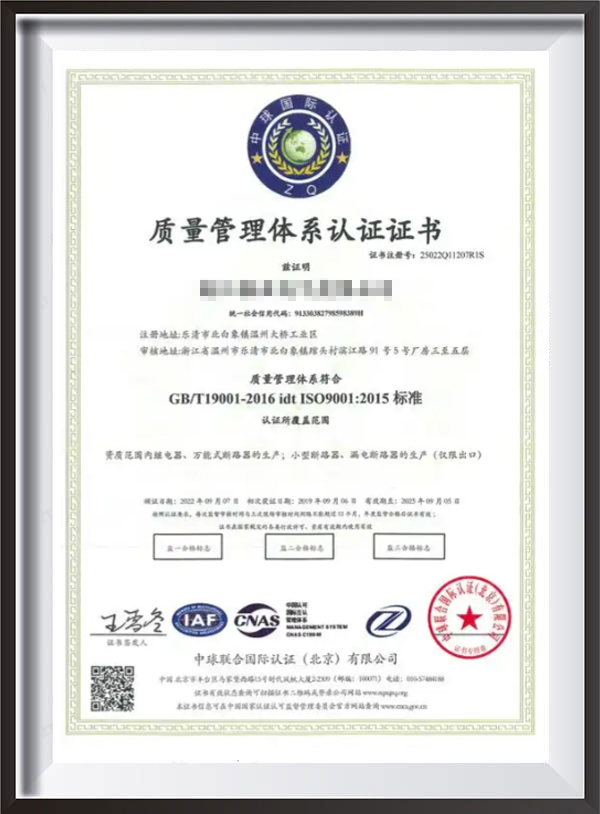
Quality control runs through the process rather than only at the end. Inspection takes place after each operation and 100% of finished goods pass final inspection against customer requirements and international standards. Our in-house laboratory is equipped with a spectrometer, coordinate measuring machine and X-ray flaw detector, covering chemical composition, mechanical properties, non-destructive testing and geometric dimensions. Our quality system is certified to ISO 9001.
Acceptance scope for a wood screw shipment is agreed at order stage: the standard or drawing revision, the dimensional characteristics checked, the mechanical property records required, and the inspection report format that accompanies the packing list.
Custom Production, Packaging and Delivery
Custom development is a core part of what we do. We produce wood screws to customer drawings or samples when a standard head, drive or length does not match an existing assembly, and we keep the same dimensional discipline across the run. For assemblies that carry higher loads or need flush finishing on the machine-thread side, our Countersunk Head Bolts extend the same surface treatment and plating options to the bolted joint.
- Packaging formats: bulk export cartons, retail blister packs, printed boxes, mixed size kits and customer-labelled assortments.
- Marking: standard or customer part numbers, batch identification and barcode labels on request.
- Shipping: sea freight as the standard mode, air freight for urgent releases, and DDP delivery options to bring goods to your door.
- Port access: our Hangzhou base sits within a short drive of the Shanghai and Ningbo port complexes, keeping export consolidation straightforward.
Information We Use to Configure Your Solution
A wood screw proposal is built from the joint, not from a catalogue page alone. The following inputs let us select the correct standard, head form, material and packaging and confirm capacity before we quote.
| Project input | Detail we work from |
|---|---|
| Standard or drawing | DIN, ASME/ANSI or NF designation, or a customer drawing or physical sample |
| Size | Nominal diameter and length, plus head dimensions where the design is non-standard |
| Head and drive | Round, pan, oval countersunk or countersunk; slotted or Phillips recess; hex head for heavy timber |
| Material and finish | Carbon steel with zinc plating, or stainless steel for humidity-exposed and outdoor timber |
| Substrate | Solid softwood or hardwood, plywood, MDF or engineered board, and the thickness of each layer |
| Driving method | Hand tool or powered driver, target drive torque, and whether pilot holes are used |
| Volume | Quantity per size, first order quantity and expected annual consumption |
| Packaging | Bulk carton, blister, printed box, kit or mixed assortment, with labelling requirements |
| Documentation | Inspection records, material certificates and marking needed at goods receipt |
| Delivery | Destination, port or DDP terms, and the required ship date |
Wood Screw Questions We Answer Most Often
Which wood screw standards do you manufacture to?
We produce the DIN 95, DIN 96, DIN 97, DIN 7995, DIN 7996 and DIN 7997 slotted and Phillips patterns, the ASME/ANSI B18.6.1 inch-series wood screws, hex head wood screws to DIN 571 and ASME B18.2.1 (T15), and NF E 25-609 and NF E 25-611 items for French-standard requirements.
Can you supply stainless steel wood screws for decking and outdoor timber?
Yes. Stainless steel is our standard recommendation for decking, cladding battens, treated timber and any joint exposed to humidity or weather. Carbon steel with zinc plating remains the economic choice for interior furniture, cabinetry and general joinery.
Do you produce wood screws to a drawing or sample?
Custom development is core business for us. Send a drawing or sample with the head form, drive, material, finish and quantity, and our engineering team will confirm feasibility, tooling requirements and the dimensional characteristics we will inspect.
How is quality controlled, and what records come with a shipment?
Inspection is carried out after each production step and 100% of finished goods receive final inspection against customer requirements and international standards. Chemical composition, mechanical properties, non-destructive testing and dimensional checks are supported by our in-house spectrometer, CMM and X-ray flaw detector, and the agreed inspection report travels with the packing list.
What packaging and delivery options do you offer?
We pack in bulk export cartons, retail blisters, printed boxes, mixed size kits and customer-labelled assortments. Sea freight is our main mode, air freight is available for urgent releases, and DDP delivery can be arranged for customers who want goods delivered directly to their premises.
What do you need to quote a wood screw program?
Standard or drawing, size range, head and drive, material and finish, substrate, driving method, volumes per size, packaging format and delivery destination. With those details we confirm the applicable standard table, the inspection scope and the shipping schedule for the quotation.





